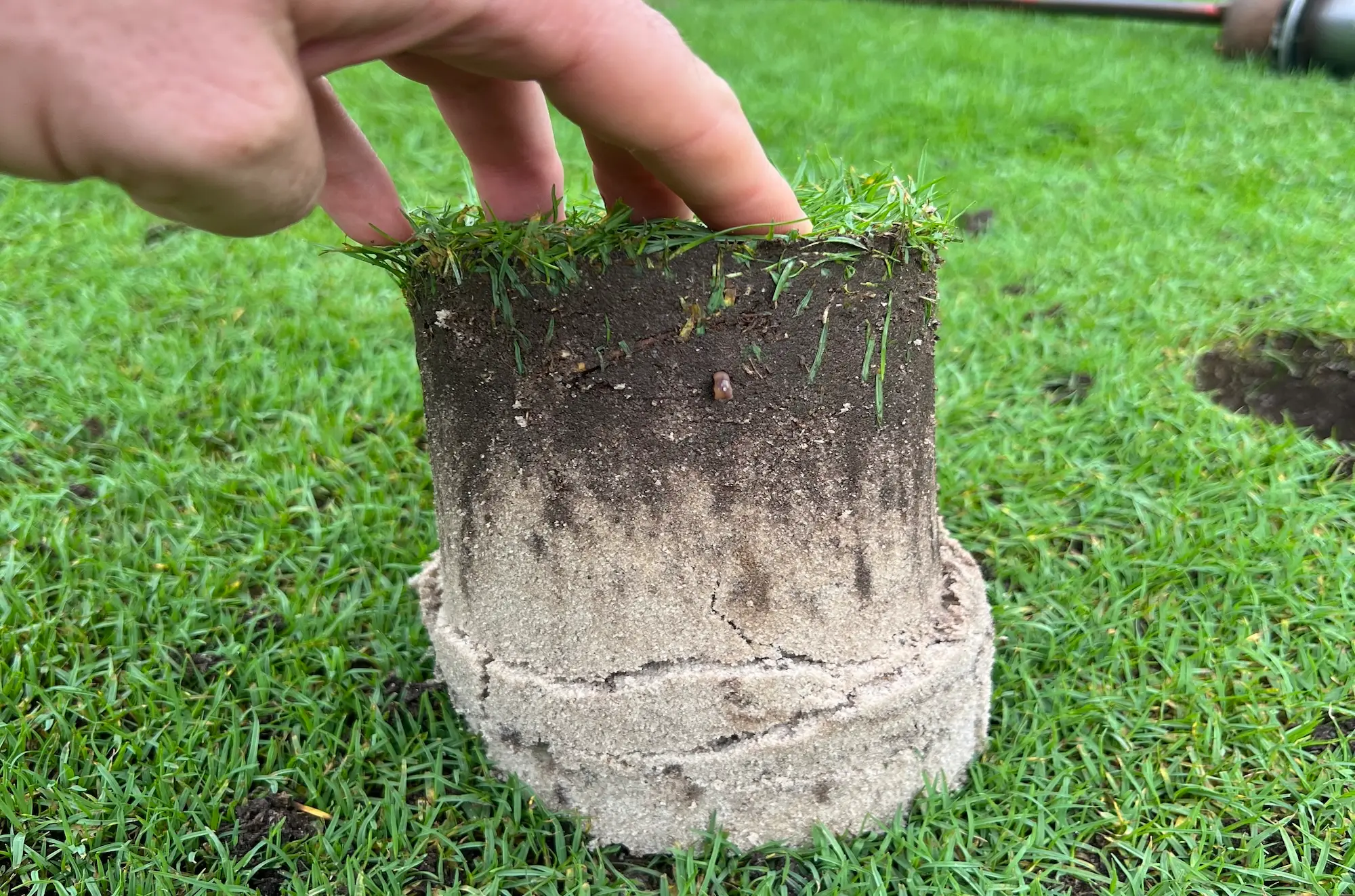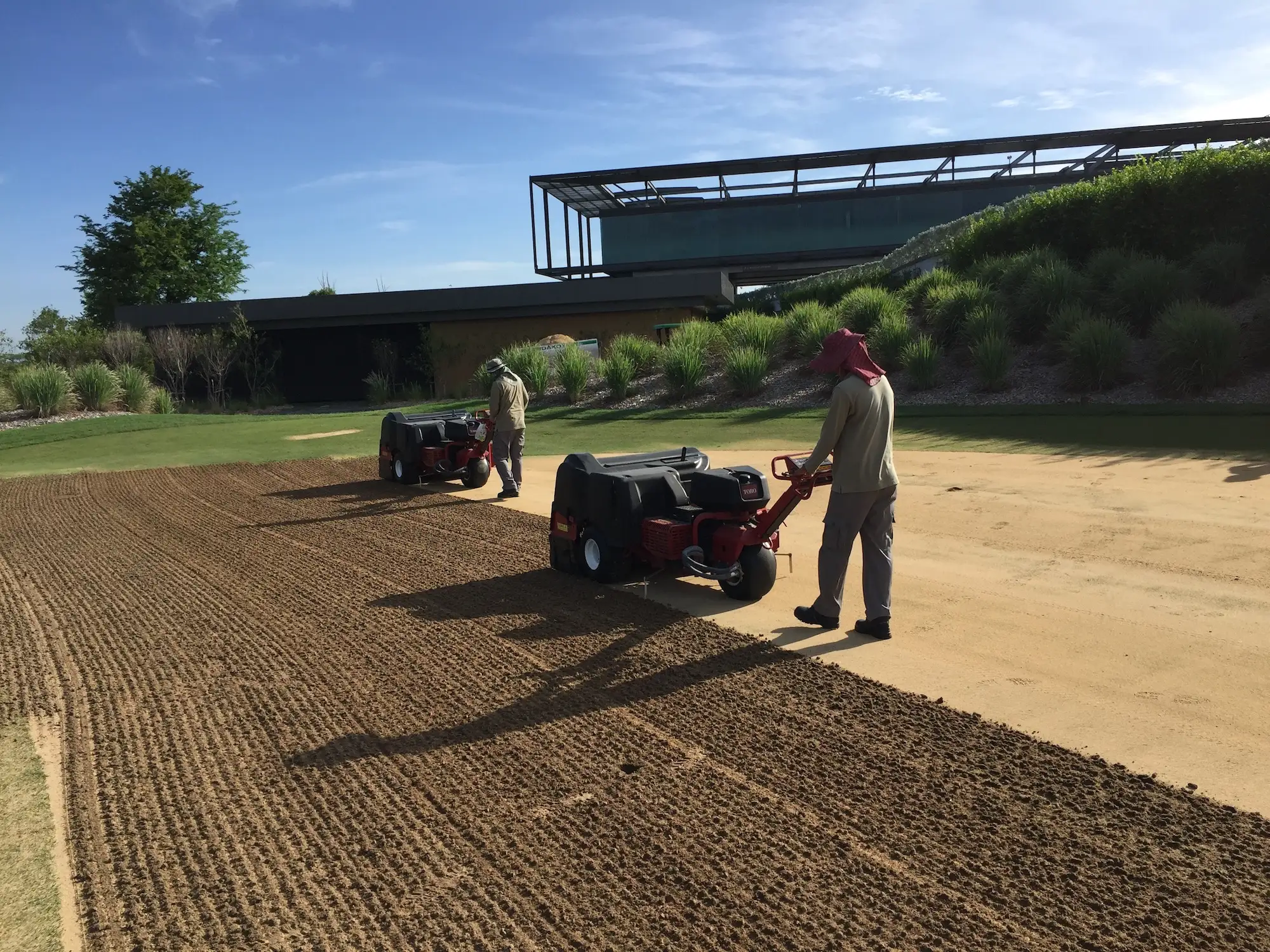
The problem with that approach is that organic matter accumulation is constantly changing. Turf growth, climate, irrigation, fertility, topdressing frequency, and maintenance intensity all influence how quickly organic material develops within the profile. Without measuring those changes over time, it becomes very difficult to know whether a program is actually moving the surfaces in the right direction.
This is where OM246 testing has become such a valuable tool for modern turf management.
Rather than relying on guesswork, OM246 testing allows facilities to measure organic matter concentrations at different depths within the profile, monitor how those levels change over time, and fine tune agronomic programs based on measurable data and desired surface performance outcomes.
The result is a more precise, efficient, and predictable approach to managing putting surfaces.
A Better Understanding of What Is Happening Below the Surface
One of the biggest limitations of traditional organic matter management is that surface appearance often tells only part of the story.
Greens can look healthy while organic matter is steadily accumulating beneath the surface and restricting infiltration, increasing moisture retention, and softening playing conditions. In other cases, facilities may be aggressively cultivating surfaces that are already sitting within an acceptable organic matter range.
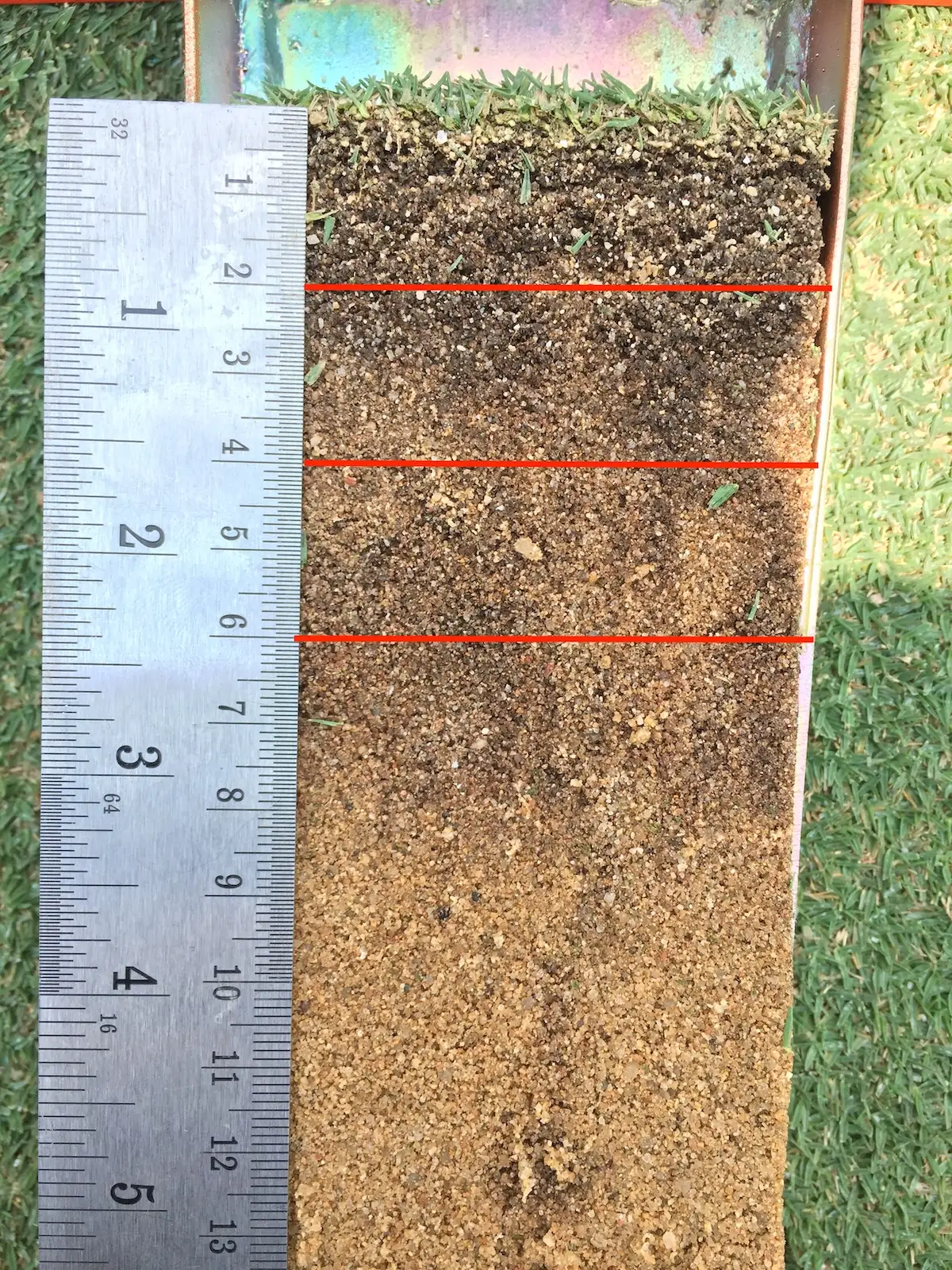
OM246 testing helps remove that uncertainty by measuring organic matter concentrations at specific depth intervals within the rootzone profile. This provides a much clearer understanding of where accumulation is occurring and how quickly those layers are developing over time.
That information becomes extremely valuable when planning:
- Topdressing programs
- Aeration intensity
- Verti-cutting or scarification frequency
- Renovation schedules
- Long term surface management strategies
Many of the key sampling principles and methodology considerations are also outlined in the USGA article, “A Standard Method for Measuring Putting Green Surface Organic Matter”.
Fine Tuning Programs Based on Measured Accumulation Rates
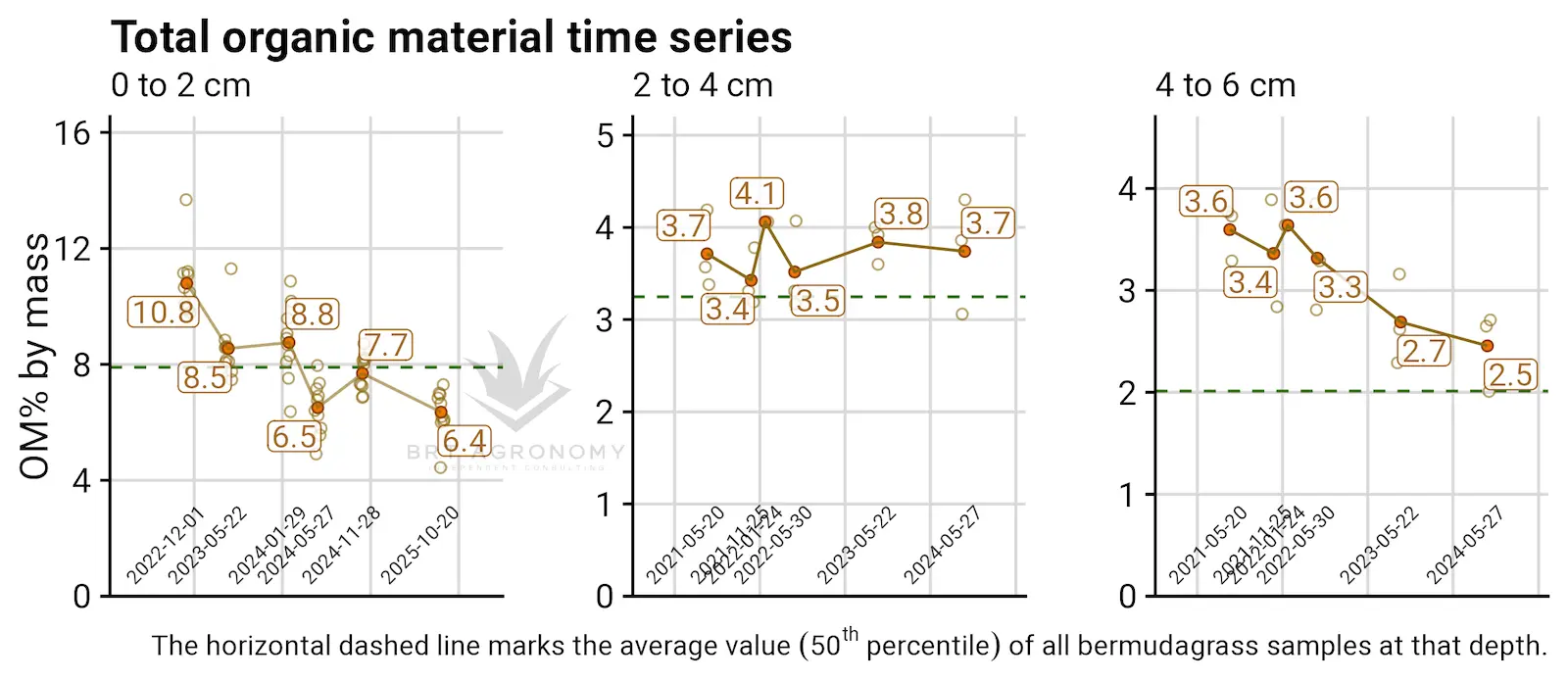
One of the biggest advantages of OM246 testing is the ability to track trends over multiple years.
Instead of repeating the same renovation program every season regardless of profile conditions, facilities can begin adjusting their programs based on measured organic matter accumulation rates and desired performance targets.
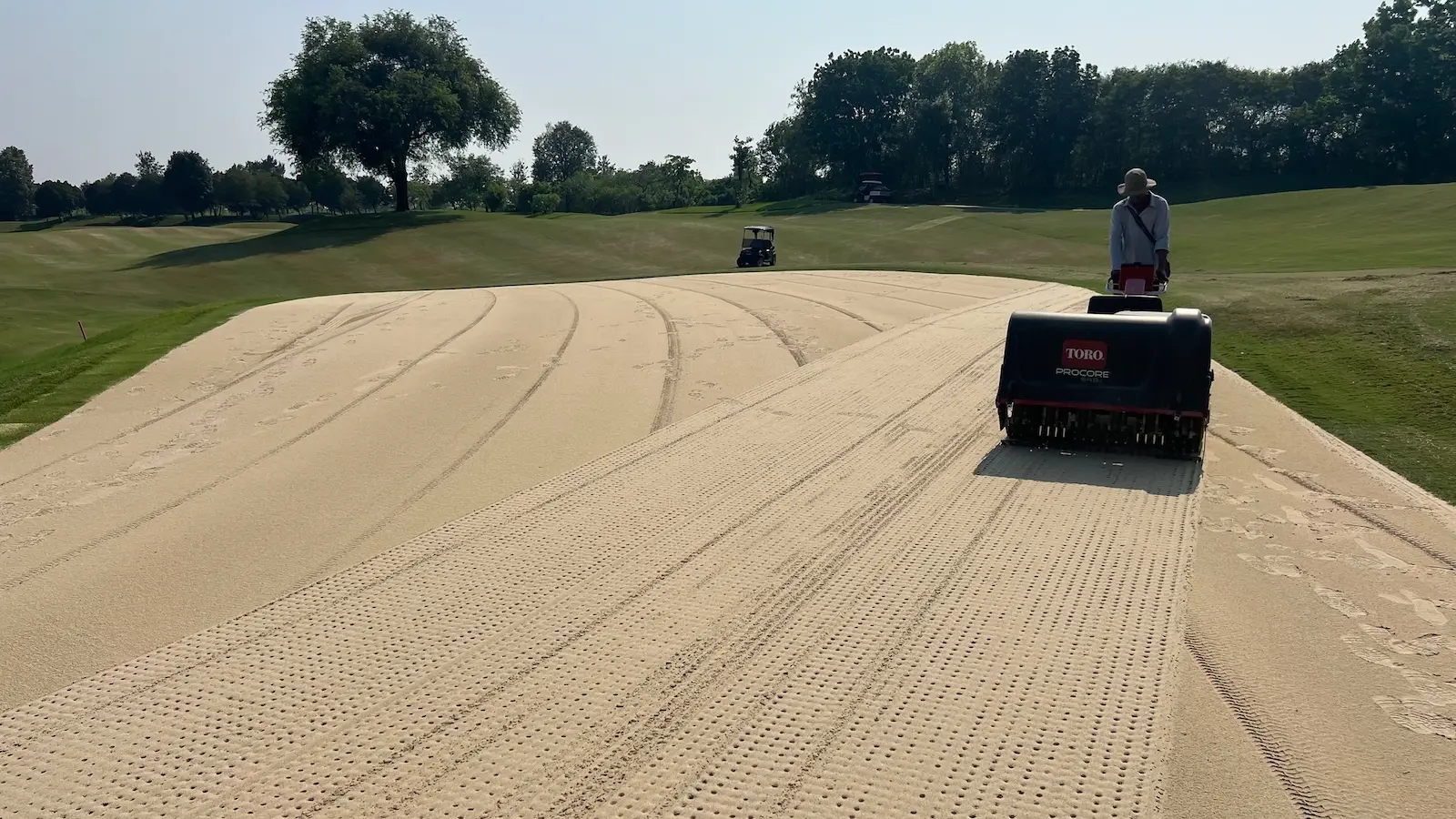
At Nikanti Golf Club, OM246 testing has been used since 2017 as part of the club’s long-term agronomic planning and renovation strategy.
Over time, the club has significantly reduced organic matter concentrations within the greens profile while improving both surface firmness and soil moisture consistency.
More importantly, the data now allows the agronomy team to fine tune their programs based on measured accumulation rates and target OM ranges rather than assumptions.
That creates far greater confidence in decision making.
If organic matter concentrations are remaining stable within the desired range, cultivation intensity may be reduced. If accumulation rates begin increasing, adjustments can be made early before major performance issues develop.
This allows facilities to become much more proactive rather than reactive in how they manage their surfaces.
Dr Micah Woods and Chris Tritabaugh also discussed seven years of OM246 data from Hazeltine National Golf Club during an Asian Turfgrass Centre Office Hours episode, highlighting the value of long-term organic matter tracking when refining cultivation, topdressing, and overall agronomic planning decisions.
Reducing Unnecessary Disruption
One of the hidden costs of traditional organic matter management is poor decision making at both ends of the spectrum.
Without reliable data, some facilities default to aggressive cultivation programs simply to avoid potential problems in the future. While this approach may feel safe, it can create unnecessary disruption to golfers, increase labour requirements, slow recovery, and significantly increase sand and machinery costs.
On the other hand, many superintendents face pressure from management, committees, or golfers to minimise disruption and achieve faster recovery times. This often leads to renovation programs that are too conservative, with insufficient organic matter removal/dilution, usually caused by small-diameter tines, which do not impact a sufficient percentage of the surface to properly manage the profile long term.
The problem is that both approaches are largely based on assumptions rather than measured profile conditions.
OM246 testing helps remove that uncertainty by allowing facilities to understand exactly where organic matter is accumulating, how quickly it is developing, and what level of intervention is actually required to achieve the desired surface performance outcomes.
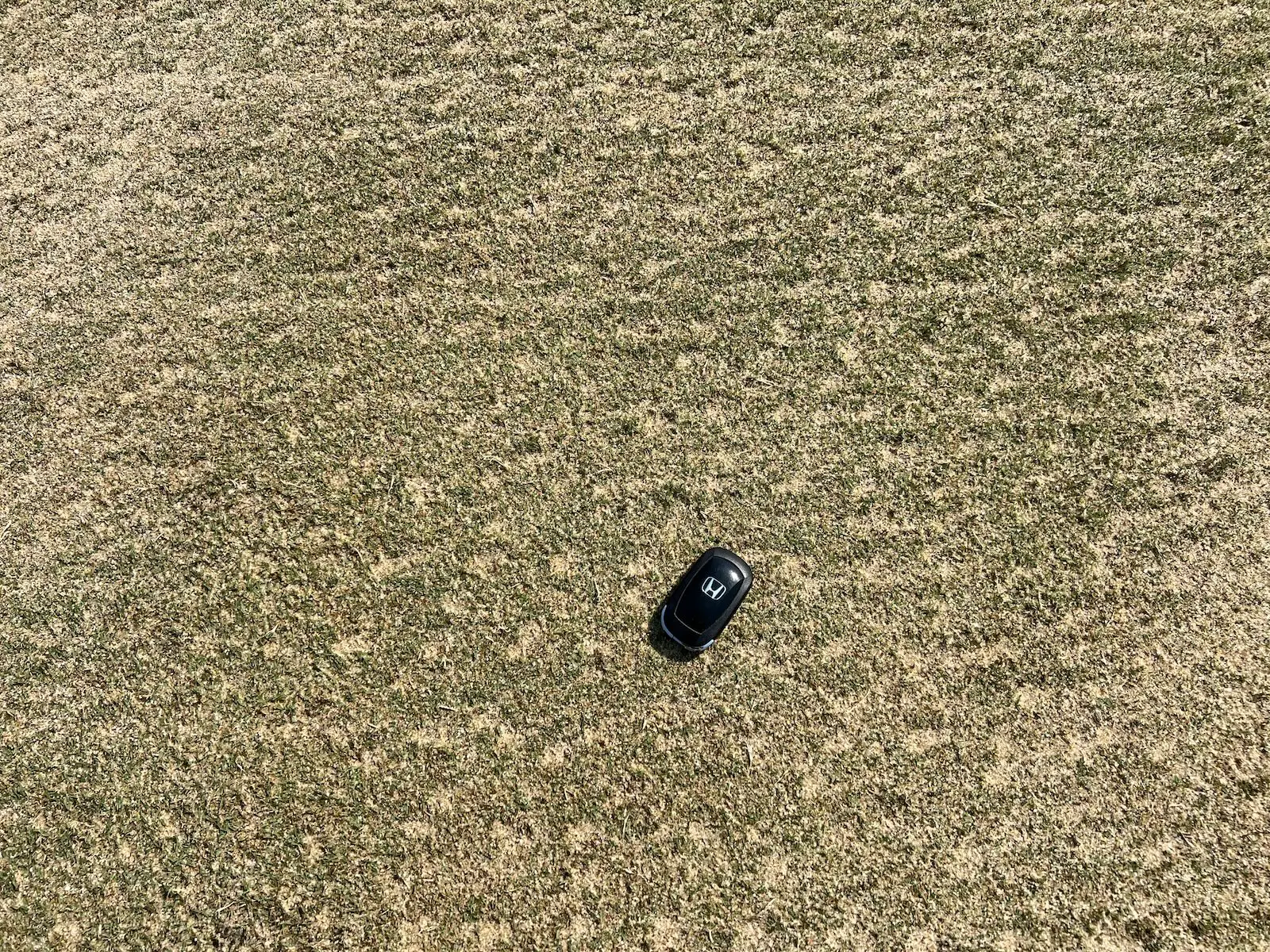
At Nikanti Golf Club, understanding that organic matter levels were already sitting within the desired target range prior to the 2026 renovations allowed the club to avoid more aggressive large-diameter coring and instead focus more heavily on surface refinement and recovery preparation ahead of tournament play.
That level of confidence is difficult to achieve without accurate profile data.
Over time, this type of data-driven decision making can significantly improve operational efficiency while also reducing unnecessary disruption and improving consistency throughout the year.
The USGA article, “Are You Managing Putting Green Organic Matter or Is It Managing You?”, also discusses the relationship between grass species, surface organic matter levels, and the importance of establishing target OM ranges based on desired performance outcomes.
Similarly, University of Nebraska research highlighted by Dr Mike Fidanza in “Revisiting a Groundbreaking Putting Green Study” demonstrates how poorly managed organic matter accumulation in sand-based rootzones can significantly reduce infiltration performance and alter the physical properties of putting greens over time.
Improving Surface Firmness and Infiltration
The long-term benefits of OM246 testing extend well beyond renovation planning.
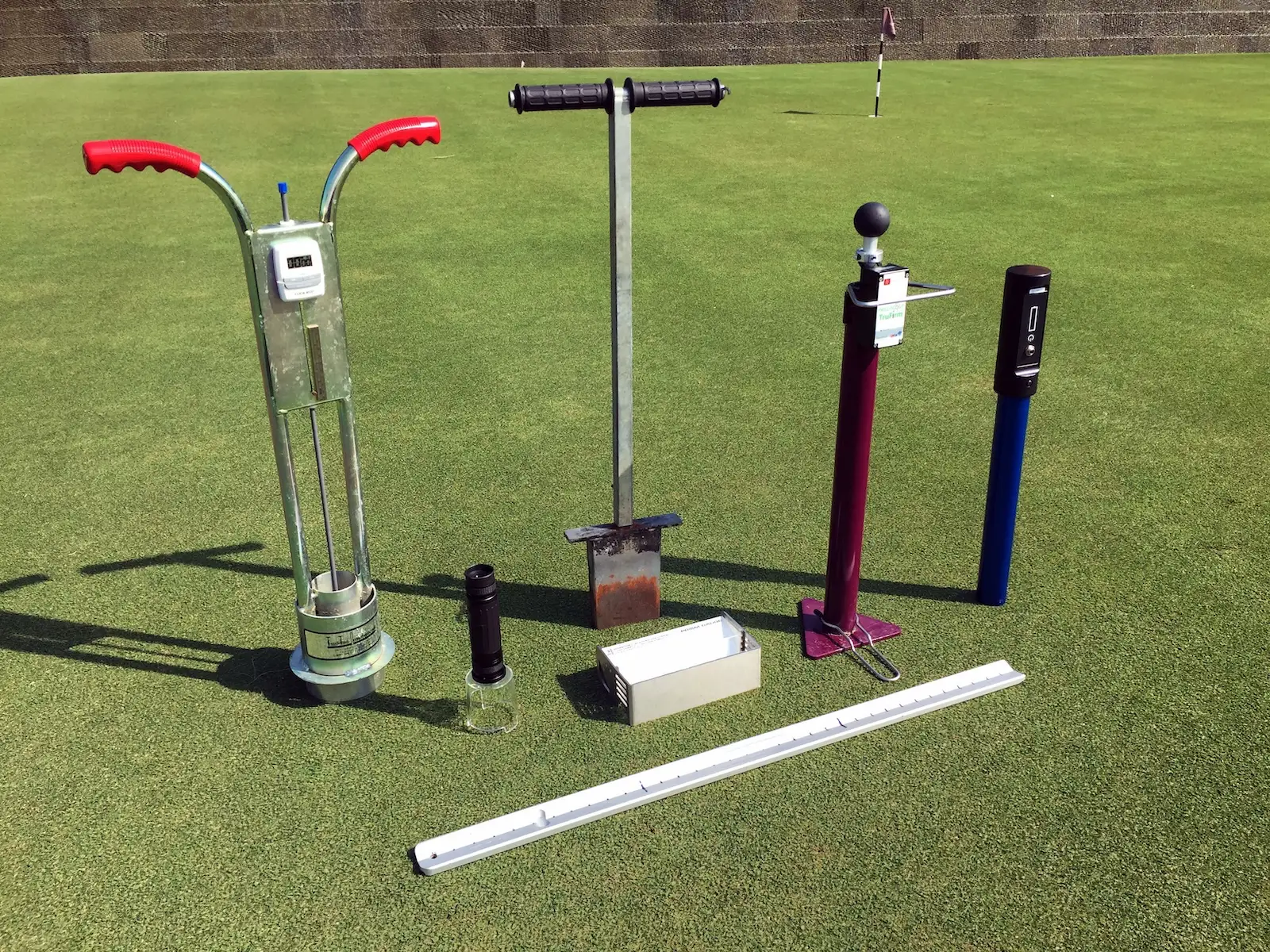
When combined with performance data such as firmness, infiltration rate, and volumetric water content, it becomes an extremely effective tool for improving overall surface consistency and year-round playability.
Independent research from the University of Nebraska and USGA has shown that the physical properties of sand-based putting greens change significantly over time as surface organic matter accumulates. Over a 10-year study period, infiltration rates declined by more than 70% while air-filled porosity decreased and capillary porosity increased.
This is one of the reasons long-term organic matter monitoring has become such an important part of modern putting green management.
At Royal Canberra Golf Club, OM246 testing has been used to guide organic matter management programs aimed at improving surface firmness and soil percolation performance. By monitoring profile changes over time and adjusting aeration and topdressing programs accordingly, the club has significantly improved year-round playability while also helping prolong the lifespan of the greens.
This is where OM246 testing becomes far more than simply a laboratory analysis.
It becomes a long-term planning and performance management tool.

OM246 Is About Performance, Not Chasing Numbers
One of the most important things to understand about OM246 testing is that the goal is not simply to produce the lowest possible organic matter percentage.
Healthy putting surfaces still require living organic material within the profile to provide stability, resilience, moisture retention, and recovery capacity. Dr Micah Woods highlights this in his ATC article "OM246 Measures Living Organic Material Too".
“Letting the grass establish enough living material, without always punching holes in it and disrupting it, leads to firmer surfaces.”
The objective is to identify the organic matter range where the surfaces perform as desired, then manage the profile to remain within that range as consistently as possible over time.
For some facilities, that may mean reducing organic matter concentrations to improve infiltration and firmness. For others, it may involve maintaining slightly higher levels to improve moisture retention and surface stability.
The key difference is that OM246 testing allows those decisions to be based on measurable data rather than assumptions.

Better Data Leads to Better Decisions
Modern agronomy is becoming increasingly data driven.
Facilities now have the ability to measure and track surface firmness, soil moisture, infiltration rates, clipping volume and organic matter accumulation over time. The clubs consistently producing the best long-term results are increasingly those using this information to guide decision making rather than simply repeating the same maintenance programs every year.
OM246 testing plays an important role in that process.
By tracking profile conditions over time, facilities can better understand how their surfaces are responding to different management practices, make more informed decisions, improve operational efficiency, and maintain more consistent playing conditions throughout the year.
Most importantly, it allows golf courses to move away from guesswork and towards measurable, performance-driven surface management.
If you would like to better understand your putting green profile or discuss implementing OM246 testing at your facility, feel free to get in touch.