Most turf managers understand that a fertiliser labelled 46-0-0 contains 46% nitrogen. Nitrogen is almost always expressed as the actual nutrient.
Phosphorus and potassium are different.
On fertiliser labels, phosphorus is usually expressed as phosphate (P₂O₅) and potassium as potash (K₂O), rather than elemental phosphorus (P) and potassium (K).
This distinction might seem minor, but it can significantly affect nutrient budgeting, soil test interpretation, and annual fertiliser planning.
Why Does This Matter?
Most soil tests, plant tissue tests, and agronomic recommendations refer to elemental nutrients.
For example, a recommendation may call for:
- 20 kg/ha phosphorus (P)
- 40 kg/ha potassium (K)
However, the fertiliser products used to supply those nutrients are usually labelled as P₂O₅ and K₂O.
If you assume the numbers on the bag represent elemental phosphorus and potassium, you will overestimate how much nutrient you are actually applying.
The Conversion Factors
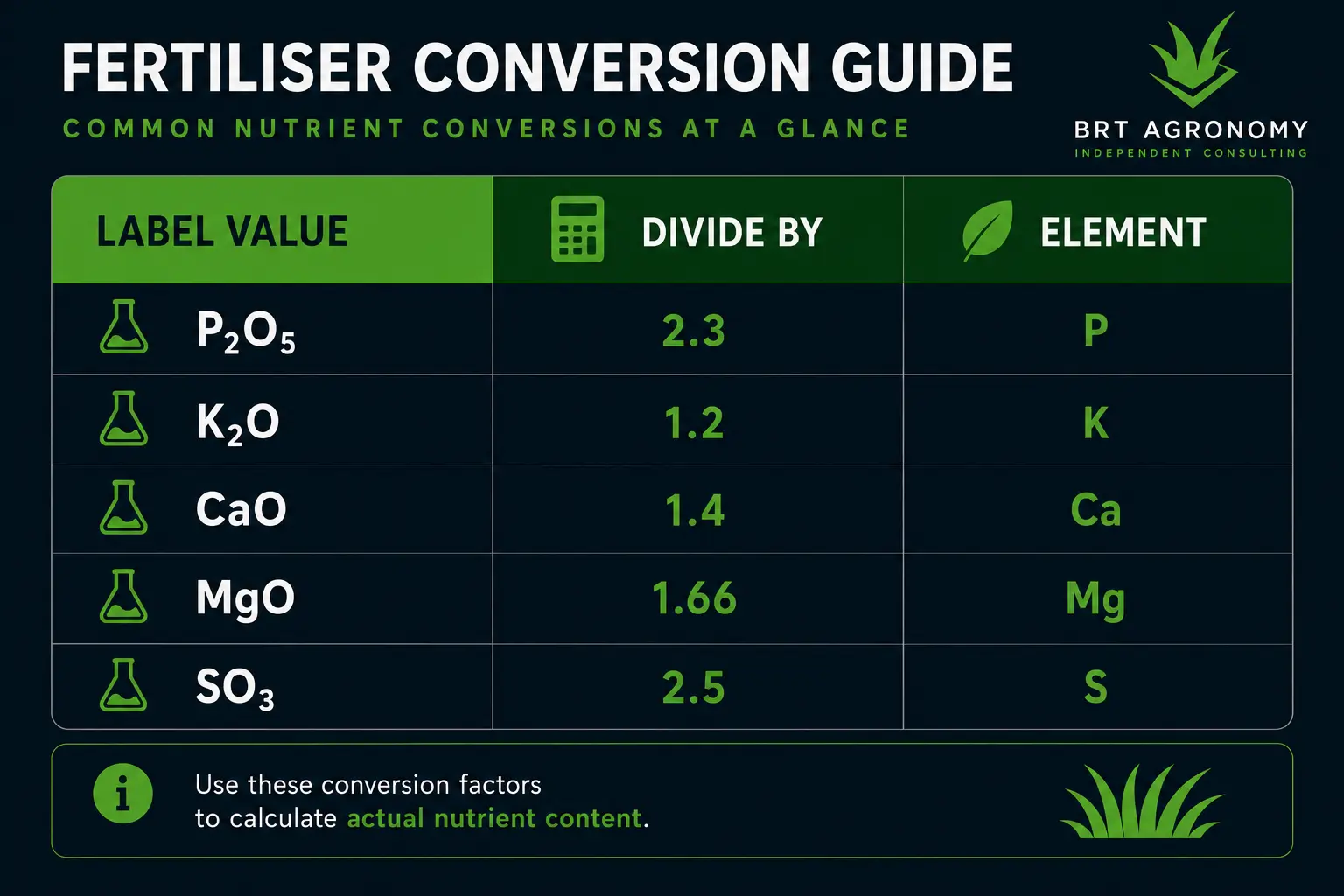
Fortunately, converting oxide values to elemental nutrients is straightforward.
Phosphorus
P₂O₅ ÷ 2.3 = P
Potassium
K₂O ÷ 1.2 = K
Alternatively:
- P₂O₅ contains approximately 43.6% elemental phosphorus
- K₂O contains approximately 83% elemental potassium
These conversion factors allow fertiliser applications to be compared directly with soil test recommendations and nutrient budgets.
A Practical Example
Let's look at a common fertiliser product.
Potassium sulphate is typically labelled as:
- 0-0-50
Many turf managers assume that applying 30 kg/ha of this product supplies 15 kg/ha of potassium.
Technically, it supplies:
30 kg/ha × 50% = 15 kg/ha K₂O
To determine how much elemental potassium is actually being applied:
15 ÷ 1.2 = 12.5 kg/ha K
Therefore, a 30 kg/ha application of potassium sulphate supplies:
- 15 kg/ha K₂O
- 12.5 kg/ha elemental K
The difference may seem small for a single application, but over an entire season it can have a significant impact on nutrient budgeting calculations.
The Same Issue Exists with Other Nutrients
Phosphorus and potassium are the most common examples, but they are not the only nutrients that may be displayed as oxide equivalents.
Depending on the product and country of manufacture, calcium, magnesium and sulphur may also be displayed differently.
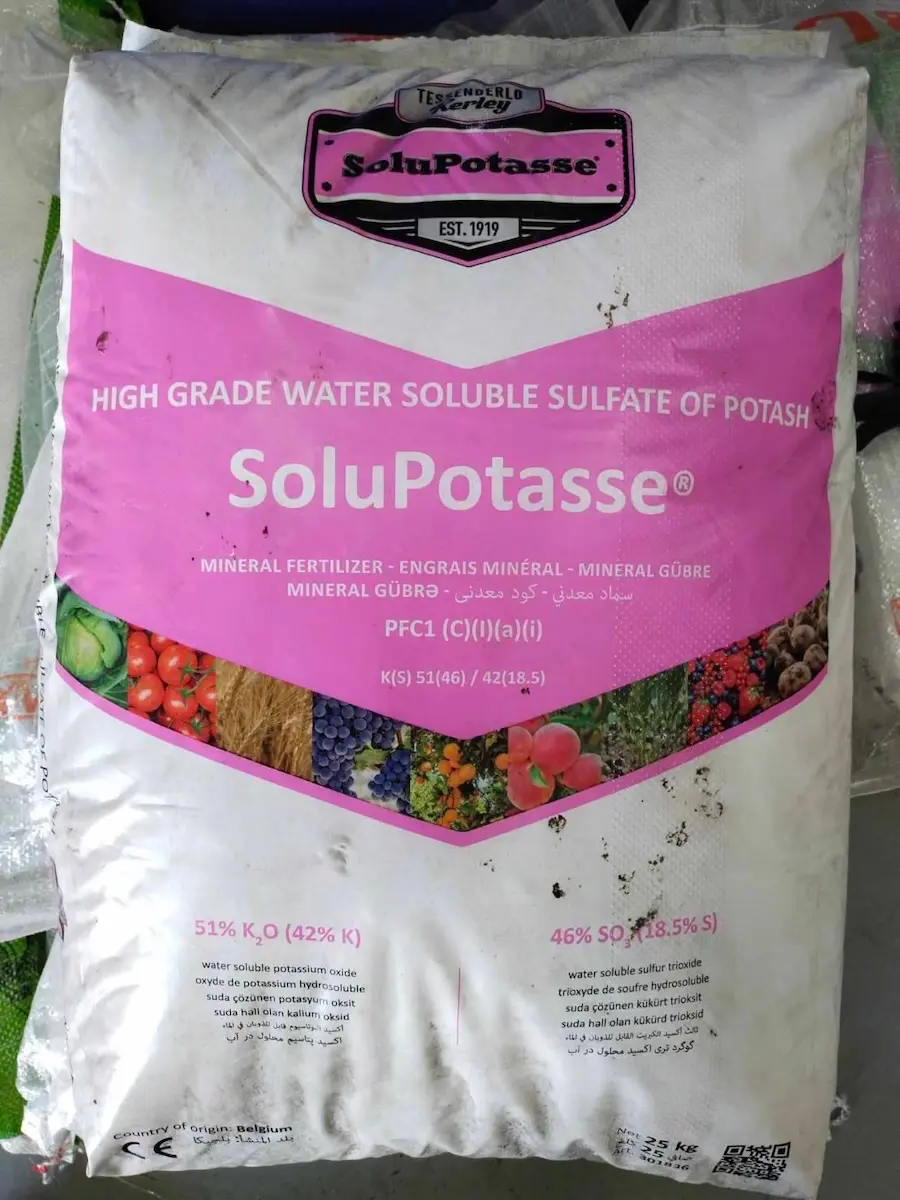
A good example is the potassium sulphate product shown above, which displays both oxide and elemental values on the bag:
- 51% K₂O (42% K)
- 46% SO₃ (18.5% S)
In this case, the manufacturer has already provided the elemental nutrient values. Many products do not.
For most turf managers, phosphorus and potassium are the conversions you'll encounter most often. However, it's always worth checking exactly what form a nutrient is being expressed in before comparing products or calculating application rates.
Which Nutrients Are Already Expressed as Elements?
Fortunately, most fertiliser nutrients do not require conversion.
Nitrogen, in it's three forms, and micronutrients are generally expressed as elemental nutrients on fertiliser labels.
Examples include:
- 46% N in urea
- 24% S in ammonium sulphate
- 19.5% Fe in ferrous sulphate
- 31% Mn in manganese sulphate
These values can generally be used directly in nutrient calculations.
Why Do Fertiliser Labels Use Oxides?
The short answer is tradition.
The fertiliser industry adopted oxide equivalents many decades ago and they remain the standard method of reporting phosphorus and potassium in many countries today.
The confusing part is that fertiliser products do not actually contain pure P₂O₅, K₂O or SO₃ compounds. These figures are simply a standardised way of expressing nutrient content.
As a result, turf managers often find themselves working with two different systems:
- Soil tests reporting elemental nutrients
- Fertiliser labels reporting oxide equivalents
Without understanding the conversion factors, it becomes difficult to accurately match fertiliser applications to turf requirements.
Final Thoughts
Whenever I provide nutrient recommendations in my reports, I refer to elemental nutrients rather than oxide equivalents.
Understanding the difference between P and P₂O₅, K and K₂O, or even S and SO₃ helps avoid confusion and improves the accuracy of nutrient budgeting.
The next time you pick up a bag of fertiliser, take a closer look at what those numbers are actually telling you. You may be applying less than your nutrient budget assumes.