Golf course superintendents spend countless hours evaluating what happens above the ground. Green speed, firmness, soil moisture, clipping yield, disease activity and surface smoothness are all monitored because they directly influence turf quality and the golfing experience.
Yet every one of these surface characteristics is heavily influenced by something golfers never see—the physical performance of the rootzone beneath them.
Understanding rootzone performance is one of the most important, yet least understood, aspects of modern golf course management. It is also one of the greatest opportunities to improve both turf health and putting surface performance over the long term.
Every Putting Green is an Engineered System
Unlike natural soils, putting greens are carefully engineered growing environments. Every component of the rootzone is selected to achieve a balance between drainage, moisture retention, aeration and stability. Sand particle size, pore space and organic amendments all influence how the rootzone performs.
The USGA has spent decades refining its recommendations for putting green construction because these physical characteristics directly influence both turf performance and surface performance. A successful rootzone must provide sufficient drainage following rainfall while retaining enough moisture for healthy turf growth. At the same time, it must provide adequate oxygen for root development while remaining firm and stable under daily maintenance and play.
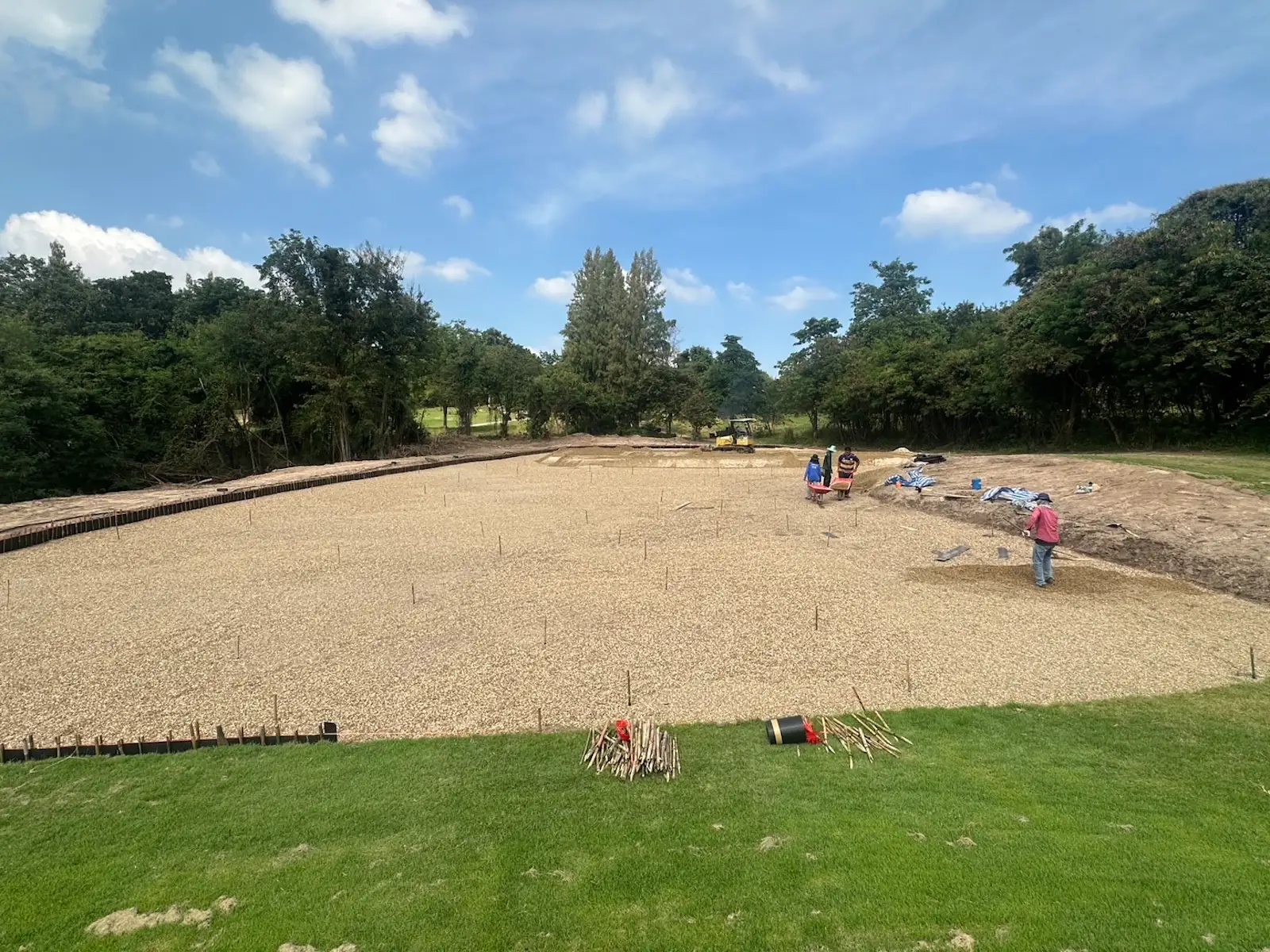
Construction, however, is only the starting point. From the day a putting green is opened, its physical characteristics begin to change.
The Rootzone You Manage Today is Rarely the Rootzone That was Originally Built
Every topdressing application introduces new sand. Aeration redistributes material throughout the profile. Roots continually grow and decompose, organic matter accumulates, and fine particles gradually migrate through the soil. Individually, these changes are small, but together they slowly modify the physical characteristics of the upper portion of the profile.
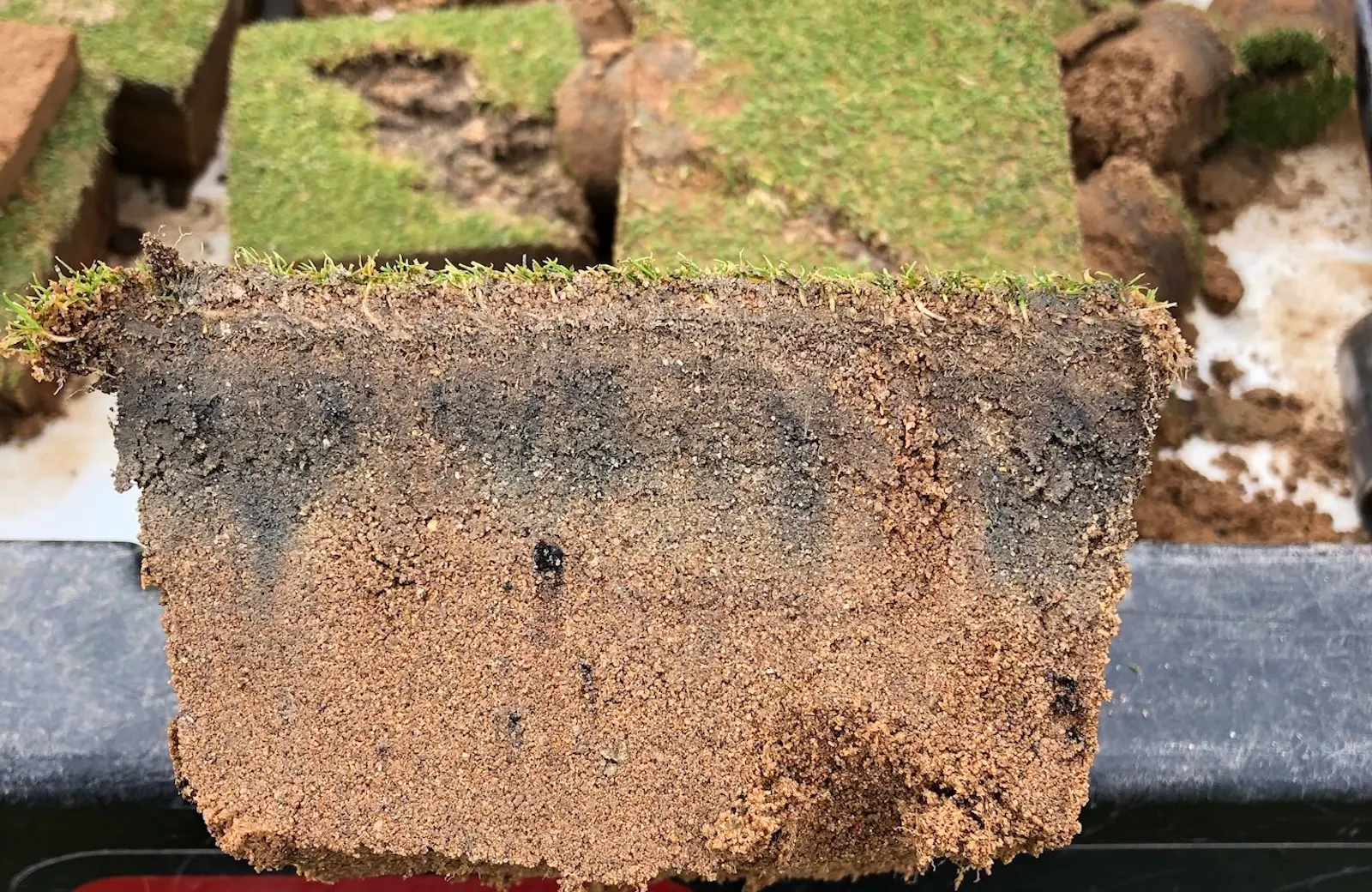
These changes occur so gradually that they often go unnoticed. After years of maintenance, the upper managed rootzone may behave very differently from the original construction material beneath it.
The putting green is still supported by the same foundation, but the rootzone controlling water movement, oxygen availability, firmness and ultimately surface performance has evolved. Understanding this evolution is fundamental to understanding rootzone performance.
Every maintenance decision therefore influences not only today's playing conditions, but also the long-term condition of one of the golf course's most valuable assets. Well-managed rootzones can continue to deliver exceptional performance for decades, while allowing physical performance to gradually decline may ultimately shorten the lifespan of the green and bring forward the need for costly reconstruction or resurfacing.
One Green. Two Rootzones.
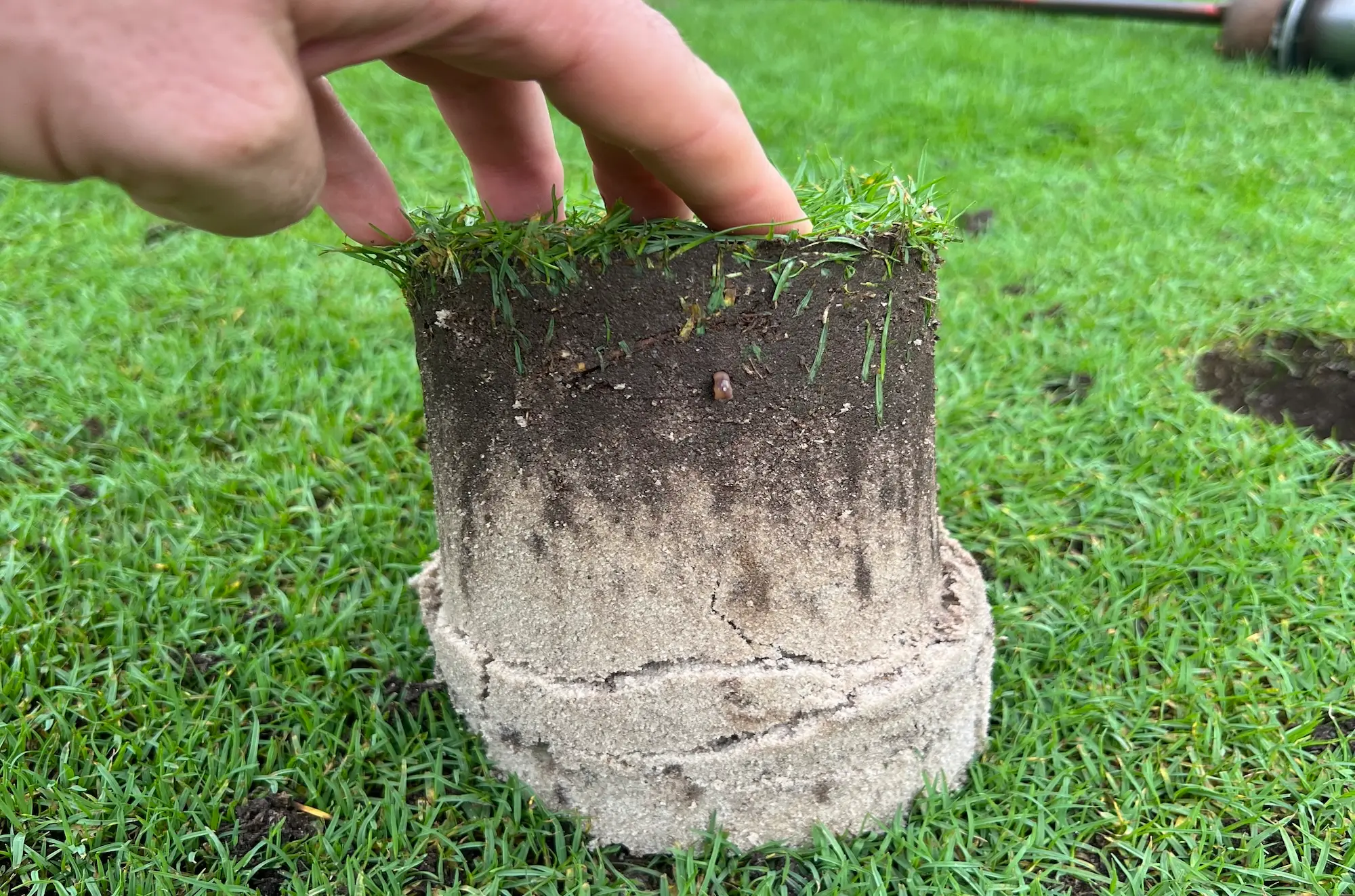
One of the most useful ways to think about an established putting green is as two distinct rootzones. The first is the original construction rootzone. This is the engineered growing medium installed when the green was built. Although it changes over time, much of its original physical structure often remains intact.
The second is the managed rootzone. This is the portion of the profile that has evolved through years of topdressing, cultivation, root growth and organic matter accumulation. It largely determines how water enters the soil, how rapidly it drains, how much oxygen remains available to roots and, ultimately, how the putting surface performs.
Golfers rarely experience the original construction rootzone directly. They experience the managed rootzone.
Understanding the relationship between these two layers often explains why mature greens perform very differently from when they were first constructed.
A Case Study in Rootzone Evolution
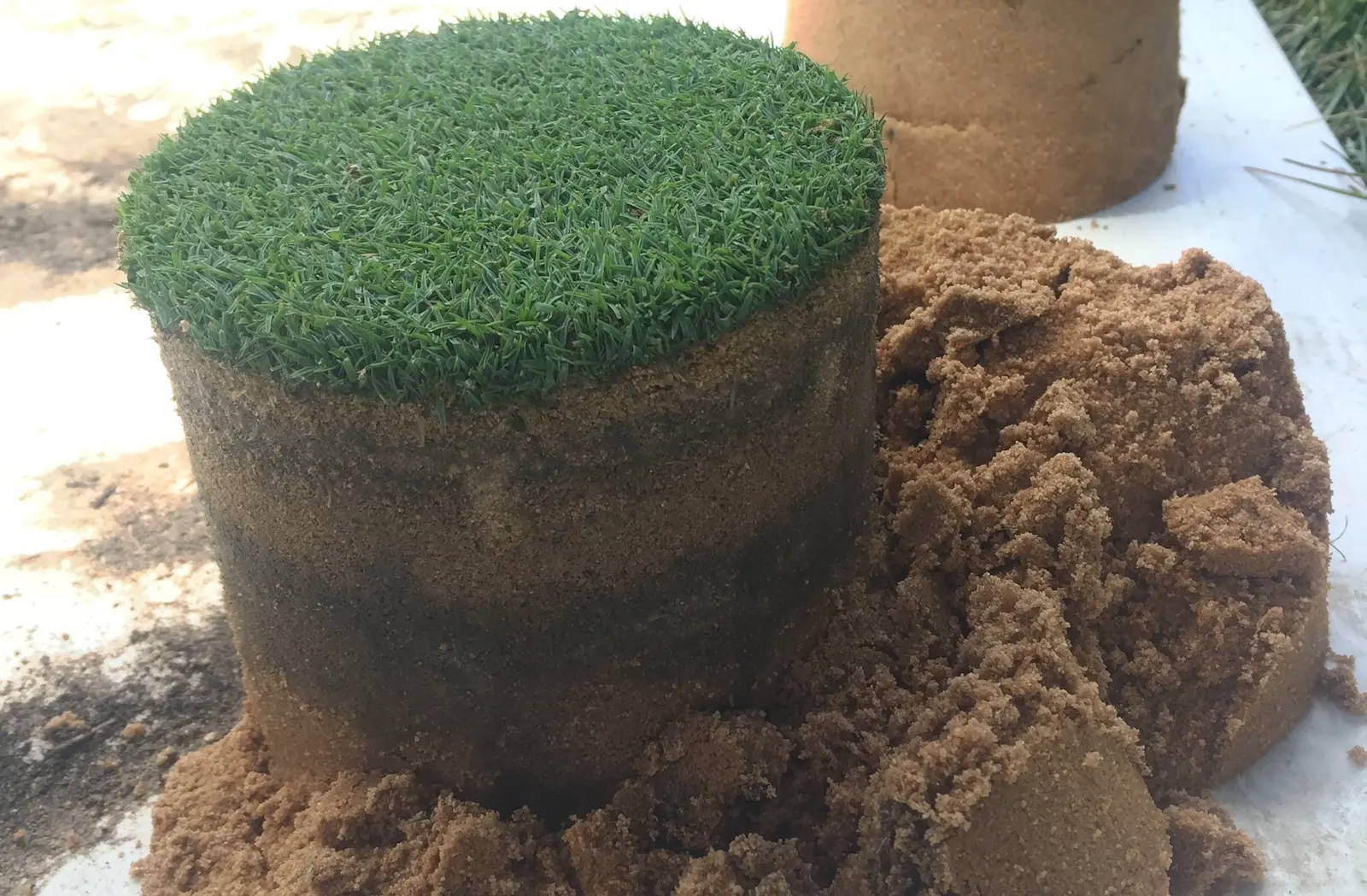
A mature sand-based putting green was recently assessed after becoming noticeably softer following rainfall and increasingly difficult to manage during the most demanding parts of the year. From the surface, the diagnosis appeared straightforward. The greens retained excessive moisture, disease pressure had increased and recovery following heavy rainfall had slowed.
Many would immediately suspect excessive organic matter. Others may have recommended more aggressive aeration or investigated the drainage system.
Before making recommendations, the managed rootzone and the original construction rootzone were tested independently.
The results were revealing.
The original construction profile was still performing remarkably well, with physical characteristics largely consistent with those expected from a well-constructed sand-based rootzone. The greatest changes had occurred within the managed rootzone, where years of topdressing, cultivation and organic matter accumulation had gradually altered water retention, oxygen availability at field capacity and the movement of water through the profile. Although both samples came from the same putting green, they behaved like two completely different rootzones.
Nothing had gone wrong with the original construction.
The managed rootzone had simply evolved.
Stop guessing. Start measuring.
One of the biggest differences between reactive and proactive golf course management is measurement.
Most golf courses routinely analyse soil nutrients and irrigation water because those results guide fertiliser and irrigation decisions. Far fewer understand how their greens actually perform as a growing medium, despite the physical performance of the rootzone influencing almost every aspect of putting green management.
A comprehensive Rootzone Performance Assessment should answer questions such as:
- Has organic matter accumulation changed how the rootzone performs?
- Is the profile retaining more water than intended?
- Is sufficient air-filled porosity available for healthy root development?
- Does excess water move through the profile quickly enough following rainfall?
- Is the current topdressing sand physically compatible with the existing rootzone?
- Are cultivation programs improving rootzone performance or simply maintaining the status quo?
Without answers to these questions, many maintenance decisions become educated guesses.
Organic Matter is Only Part of the Story
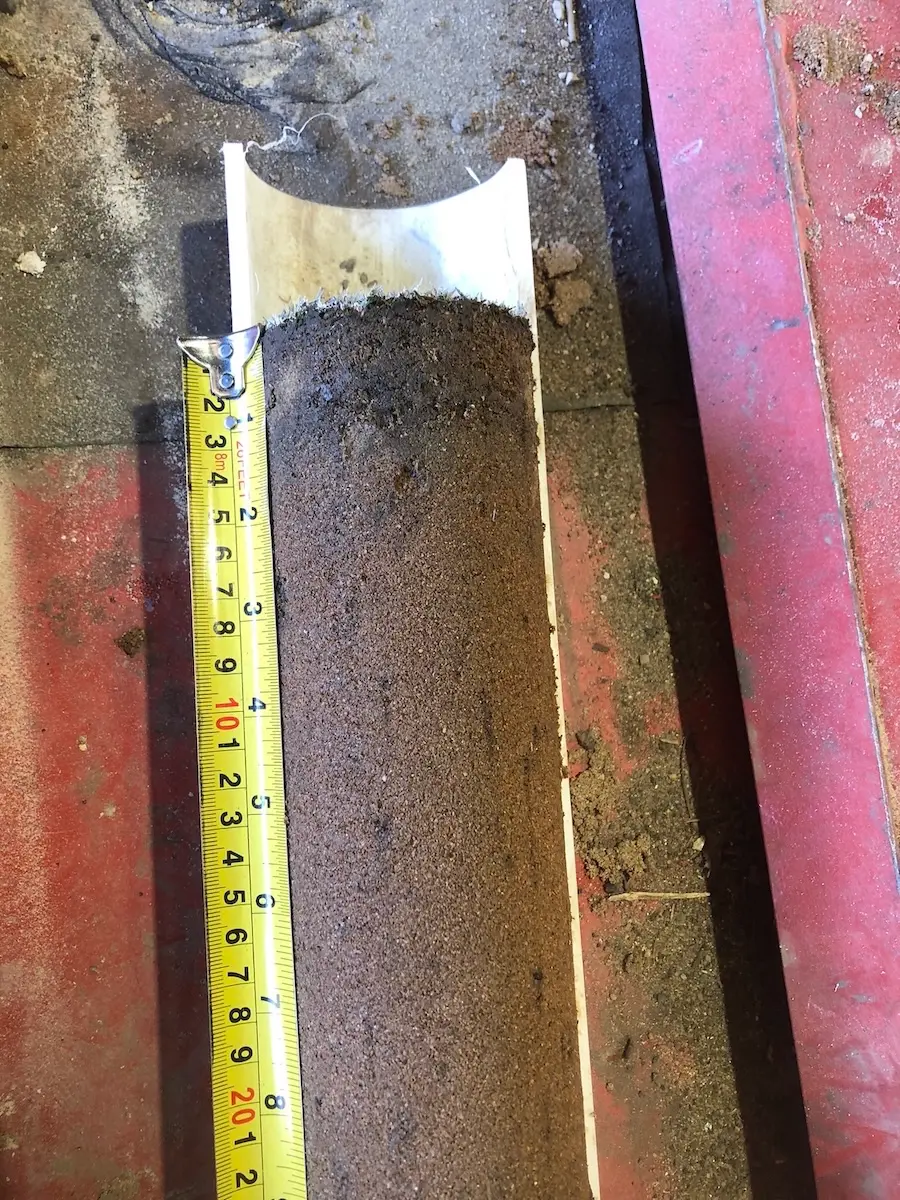
Organic matter management has become one of the most discussed topics in modern turf management, and rightly so. Excessive organic matter can reduce infiltration, increase moisture retention, soften surfaces and create favourable conditions for disease development.
However, measuring organic matter alone does not tell the complete story.
The OM246 method provides an excellent benchmark by measuring the total organic material within the profile at multiple depths. Monitoring these values over time allows superintendents to evaluate whether topdressing and cultivation programs are achieving their intended objectives.
But OM246 tells us how much organic material exists.
It does not tell us how the rootzone performs.
Two putting greens may contain similar organic matter levels yet behave completely differently following rainfall or irrigation because the physical characteristics of the managed rootzone have evolved differently.
One may drain rapidly and remain firm.
The other may stay saturated for days.
Understanding Rootzone Performance Testing
This is where Rootzone Performance Testing becomes invaluable.
Rather than measuring a single characteristic, it evaluates how the profile functions as a complete growing system. Different measurements answer different questions. Some explain how water moves through the profile, others determine how much oxygen remains available after drainage, while others assess the compatibility of topdressing materials or quantify how the managed rootzone has changed over time.
No single measurement defines rootzone performance.
Instead, it is the combination of these physical characteristics that explains how the rootzone behaves and, ultimately, how the putting surface performs.
Measure. Benchmark. Target. Improve. Repeat.
Testing alone does not improve putting greens.
Management does.
The value of Rootzone Performance Testing lies in establishing measurable benchmarks and using those benchmarks to guide long-term maintenance decisions.
Every golf facility should understand:
- Its current rootzone performance
- How that compares with the desired performance
- Target OM246 values throughout the profile
- Target physical characteristics of the managed rootzone
- Acceptable soil moisture operating ranges
- Infiltration targets
- Annual topdressing requirements
- Cultivation objectives required to maintain those targets.
Once these benchmarks have been established, maintenance becomes considerably more precise.
Topdressing is no longer applied because the calendar says it is time.
Aeration is no longer scheduled because "we always core in May."
Instead, every cultural practice has a measurable objective.
Repeat testing then demonstrates whether the managed rootzone is moving closer to—or further away from—its performance targets. Rootzone management becomes a process of continuous improvement rather than reacting after performance has already declined.
Final Thoughts
Every putting green changes.
The challenge for modern golf course management is ensuring those changes improve rather than reduce performance.
The goal is not simply to maintain healthy turf, nor is it solely to preserve the physical characteristics of the original construction profile. The goal is to maintain both the physical performance of the rootzone and the surface performance experienced by golfers, recognising that the two are inseparably linked.
The most successful golf courses don't leave this to chance. They measure, benchmark, establish performance targets, implement maintenance programs designed to achieve those targets, and then measure again.
Because successful turf management isn't simply about growing grass.
It's about understanding how the rootzone evolves, managing that evolution, and protecting the long-term performance of one of the golf course's most valuable assets while continually improving the playing conditions experienced by golfers.