In central Thailand, the 2026 wet season followed a drier-than-average dry season before rainfall returned to more typical levels in May. On India's west coast, the southwest monsoon arrived in late June and delivered almost 1.8 metres of rainfall within the first two weeks, which is substantial, considering the average rainfall for the monsoon in that location is around 4 metres.
Regardless of location, prolonged rainfall, high humidity and extended periods of cloud cover place enormous stress on putting greens. Disease pressure increases, surfaces soften, recovery slows and opportunities for routine maintenance become increasingly limited. Turf managers often find themselves reacting to problems that appear to have developed almost overnight.
It is easy to blame the weather.
In reality, the wet season does create problems, yes. But more often, it exposes weaknesses that have been developing beneath the surface for months, or even years.
The golf courses that consistently produce firm, healthy putting surfaces throughout the wet season are rarely those with the largest fungicide budgets or the most aggressive maintenance programmes. They are usually the courses that entered the season with healthy turf, a well-performing rootzone and a preventative management strategy designed long before the first heavy rains arrived.
The Wet Season is a Stress Test
The wet season challenges almost every aspect of turf performance. Extended cloud cover reduces photosynthesis and carbohydrate production, while high humidity and prolonged leaf wetness create ideal conditions for fungal diseases. Frequent rainfall restricts opportunities for mowing, spraying, topdressing and cultivation, and saturated soils reduce oxygen availability within the rootzone, slowing recovery from normal wear.
None of these challenges occur in isolation. They combine to place the plant under continuous stress for weeks or, in many regions, several months.
Healthy turf is capable of tolerating these conditions remarkably well when supported by a strong maintenance strategy. Turf that enters the wet season under stress, however, has very little capacity to cope with additional environmental pressure. The result is often a gradual decline in surface performance that becomes increasingly difficult to reverse as the season progresses.
Rather than asking, "How do I manage the wet season?", a better question is,
"What weaknesses will the wet season expose on my golf course?"
What the Wet Season Actually Exposes
When putting green performance declines during the wet season, it is understandable to focus on the immediate symptoms. Disease outbreaks become more frequent, surfaces become softer, moisture management becomes increasingly difficult and recovery slows.
These problems are certainly associated with wet weather, but they are rarely caused by the weather alone.
The wet season may expose a rootzone that retains excessive moisture after rainfall. It may reveal areas with poor airflow or excessive shade that remain humid for much of the day. It often highlights weaknesses in preventative disease programmes, inconsistencies in irrigation management or maintenance practices that have gradually allowed plant health to decline over time.
The weather simply accelerates the consequences of those underlying weaknesses.
Build a Healthier Rootzone Before the Wet Season
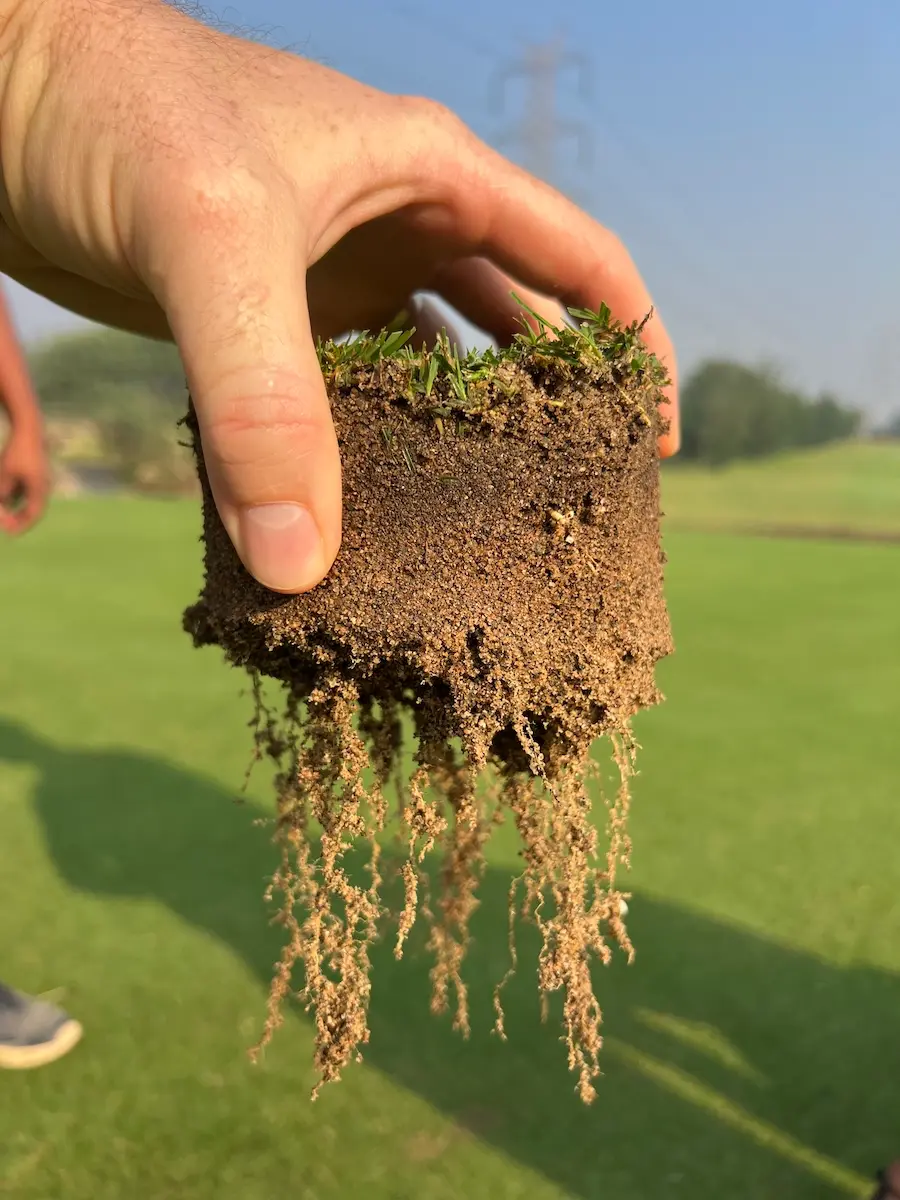
One of the greatest advantages a superintendent can have before entering the wet season is understanding how their rootzone actually performs.
As discussed in our previous article on Understanding Rootzone Performance, putting greens gradually evolve over time. Organic matter accumulates, new topdressing sands are incorporated into the surface and the physical characteristics of the managed rootzone slowly change. These changes influence how quickly water infiltrates the profile, how much moisture is retained following rainfall and ultimately how the putting surface performs during prolonged wet weather.
Preparing for the wet season should therefore begin well before the first heavy rains arrive. A comprehensive assessment should include:
- OM246 analysis to benchmark total organic matter accumulation and determine annual topdressing requirements.
- Sand particle size analysis of the managed rootzone to understand how the surface profile has evolved.
- Particle size and moisture release curve analysis of the topdressing sand to ensure it remains compatible with the existing profile and provides the desired balance between drainage and plant-available water.
- Infiltration testing to determine whether water is moving through the managed rootzone at an acceptable rate.
- Performance targets that allow topdressing, cultivation and other cultural practices to be planned around measurable objectives rather than fixed calendar dates.
These topics will be explored in much greater detail throughout our Rootzone Performance series, but the key principle is straightforward.
The wet season is not the time to discover that the rootzone is retaining excessive moisture.
It is the time to benefit from the work that was completed months earlier.
Develop Your Water Management Strategy
One of the biggest misconceptions during the wet season is that irrigation management becomes less important because rainfall has increased.
In reality, it becomes even more important.
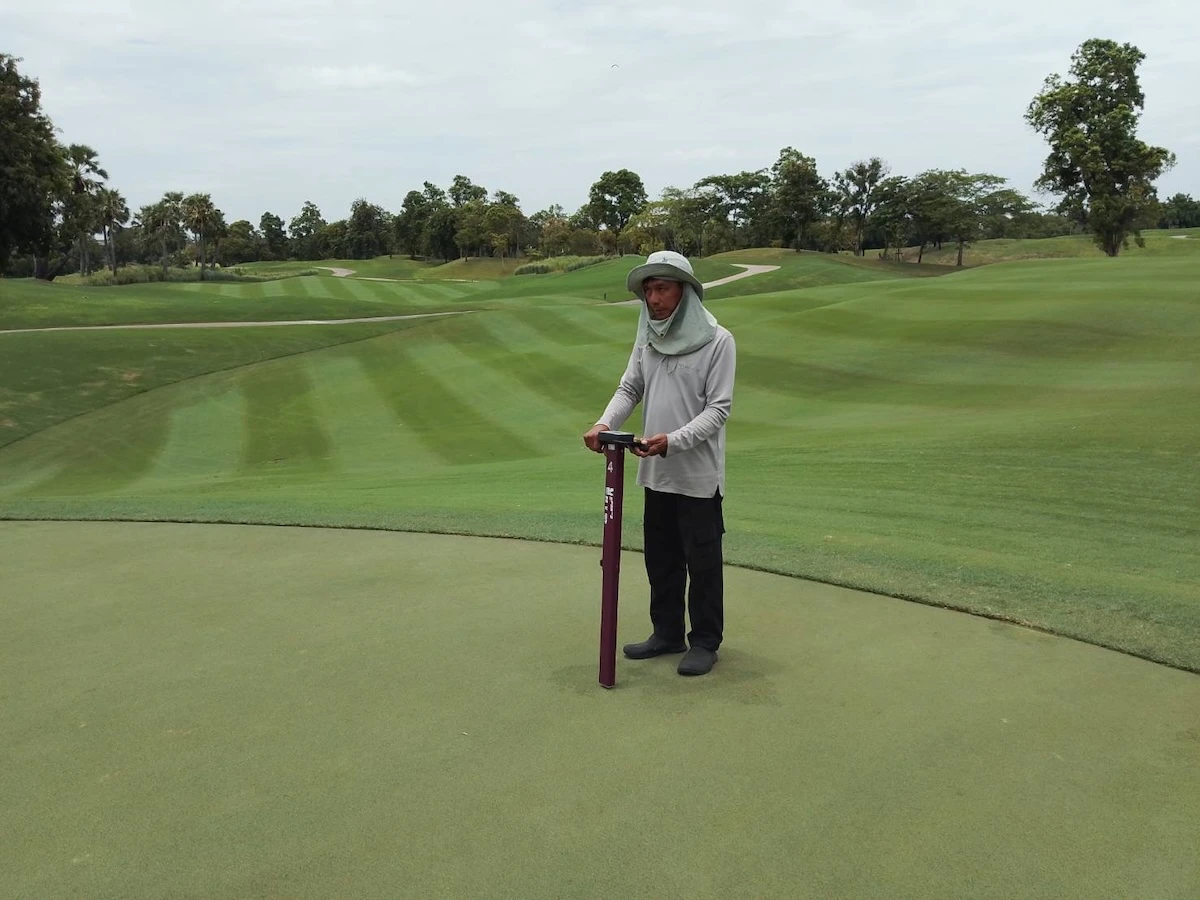
Rainfall is rarely uniform across an entire golf course, and soil moisture can vary considerably between greens depending on rootzone performance, shade, drainage and exposure to wind. Irrigation programmes should therefore continue to be guided by daily evapotranspiration (ET), measured soil moisture and plant requirements rather than rainfall totals alone. Irrigation runtimes may reduce considerably, but they should still be adjusted according to measured conditions.
Hand watering also becomes increasingly valuable. Where labour resources allow, relying more heavily on hand watering and reducing blanket irrigation can significantly reduce unnecessary water applications while maintaining healthy turf.
Monitoring soil moisture throughout the wet season also provides valuable information about root development. When moisture is consistently available near the surface, turf has little incentive to develop deeper roots and rooting depth often declines. Moisture probe tine length should therefore be adjusted to match the active rooting depth, ensuring measurements are taken within the portion of the profile where the majority of roots are actively extracting water.
Water management should also extend beyond irrigation scheduling.
Regular applications of wetting agents remain just as important during the wet season as they are during the dry season. The objective, however, often changes. Rather than focusing on protection against localised dry spot, products that encourage water penetration may become more appropriate.
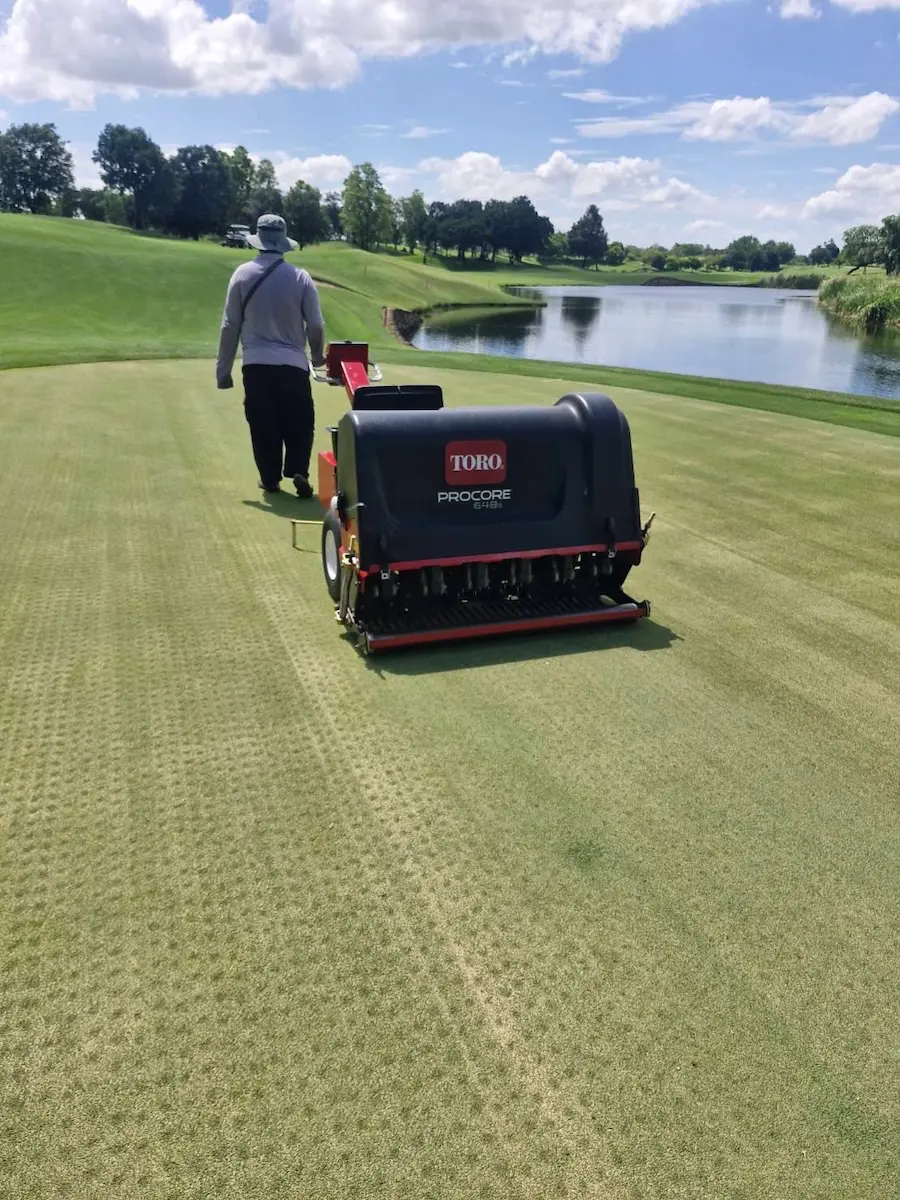
Similarly, regular solid tine or mini hollow tine aeration using small diameter tines can significantly improve gas exchange and infiltration during prolonged wet periods while causing minimal disruption to play.
Ultimately, the effectiveness of every irrigation and moisture management decision is influenced by the physical characteristics of the managed rootzone. Sand particle size distribution, organic matter accumulation and overall soil profile performance largely determine how water moves through the soil and how long it remains available to the plant.
Develop a Preventative Disease Management Programme
Disease management should begin well before disease symptoms appear.
A preventative fungicide programme remains one of the most important tools available for managing turf through prolonged wet weather. The most successful programmes are built around the disease pressures present on each golf course rather than simply following a calendar.
Across much of Asia, the primary diseases of concern typically include Pythium spp., Take All Root Rot (Bermuda/Couchgrass Decline) and Rhizoctonia spp. Secondary pathogens such as Curvularia frequently develop once turf has already been weakened by primary disease or prolonged environmental stress.
Correct disease identification is therefore essential.
Equally important is rotating fungicide chemistry according to FRAC groups to reduce the risk of resistance. Superintendents should also pay close attention to expected residual activity, recognising that the shorter interval on the product label may need to be followed during prolonged rainfall and favourable disease conditions. During extended wet weather, regular—often daily—inspection of greens allows fungicide programmes to be adjusted before disease becomes widespread.
Disease management should not rely on fungicides alone.
Excessive soil organic matter, prolonged leaf wetness, poor airflow and consistently high soil moisture all increase disease pressure while potentially reducing fungicide effectiveness. Managing these underlying conditions remains the highest priority.
Algae should also be monitored closely throughout the wet season. Once established, it can create persistent surface moisture problems and reduce turf coverage. Preventative applications of products such as chlorothalonil or mancozeb, together with spot topdressing or light applications of sand across the entire green, can help reduce light reaching the algae while encouraging a firmer, drier surface.
Maximise Plant Health Before Conditions Deteriorate
The healthiest greens entering the wet season are rarely those pushed hardest for speed. Instead, they are greens that have been managed to maximise plant health before environmental conditions become unfavourable.
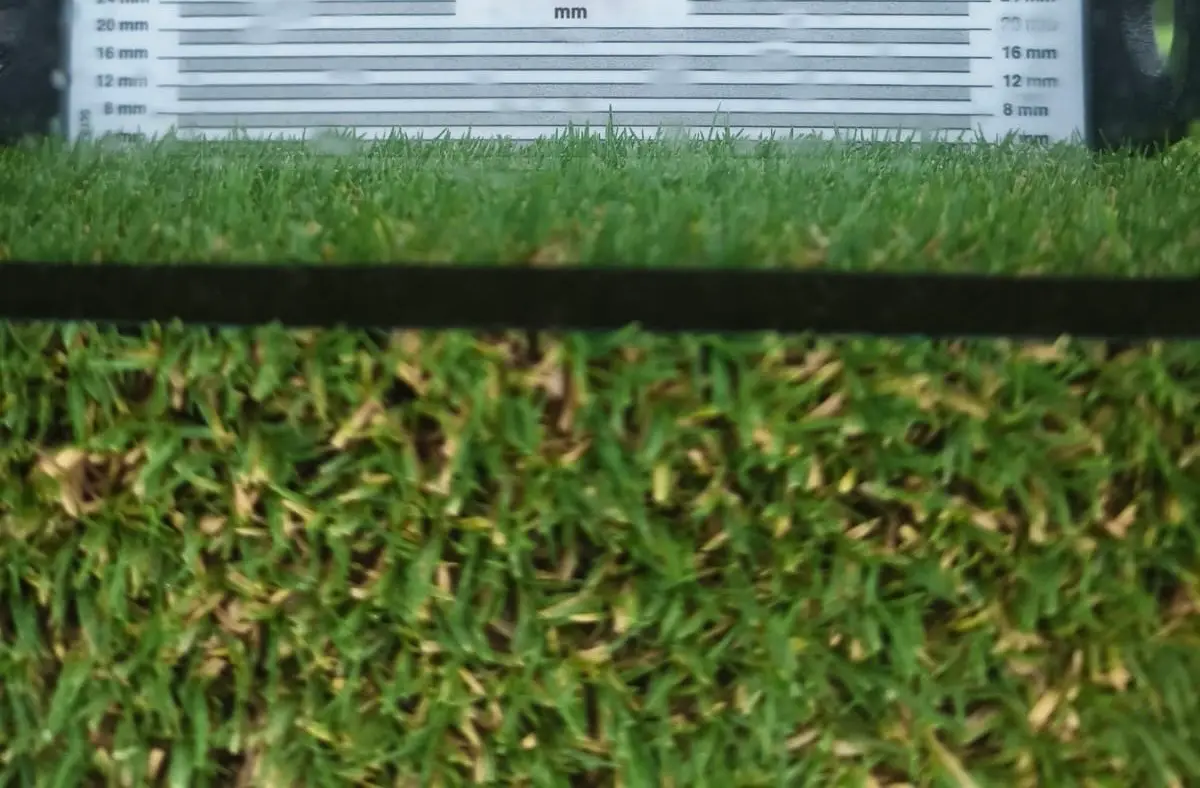
One of the simplest yet most effective strategies is to slightly raise mowing heights as prolonged cloudy weather develops. Increasing leaf area improves the plant's ability to capture sunlight and maximise photosynthesis at a time when available light is already limited. The additional leaf area also helps shade the soil surface, reducing the amount of sunlight reaching algae and making surface conditions less favourable for its development.
Maintaining balanced nutrition, monitoring clipping yield, avoiding excessive nitrogen applications and continuing to improve airflow all contribute to a healthier, more resilient plant capable of tolerating prolonged environmental stress.
As the wet season progresses, maintenance priorities should also evolve. Preserving healthy turf should take precedence over pursuing maximum green speed. A healthy plant will recover quickly once favourable weather returns.
Final Thoughts
Every wet season is different. Some years bring prolonged rainfall and persistent cloud cover, while others are characterised by intense rainfall events separated by periods of relatively dry weather. What remains consistent is the role of the wet season as a stress test.
It reveals how well the turf has been prepared, how effectively the rootzone performs and whether maintenance programmes are capable of adapting as conditions change.
The goal is not to eliminate every challenge associated with the wet season—that simply isn't possible.
The goal is to enter the season with healthy turf, a well-performing rootzone, a preventative disease strategy and the information needed to make confident management decisions throughout the months ahead.