The fungicide programme is certainly part of the discussion, but in my experience it rarely explains the whole problem. There are plenty of occasions where the same programme is being applied across every green, yet one or two surfaces continue to suffer considerably more disease than the rest of the golf course. In those situations, changing the fungicide may provide some improvement, but unless we understand what is different about those greens, the underlying problem usually remains.
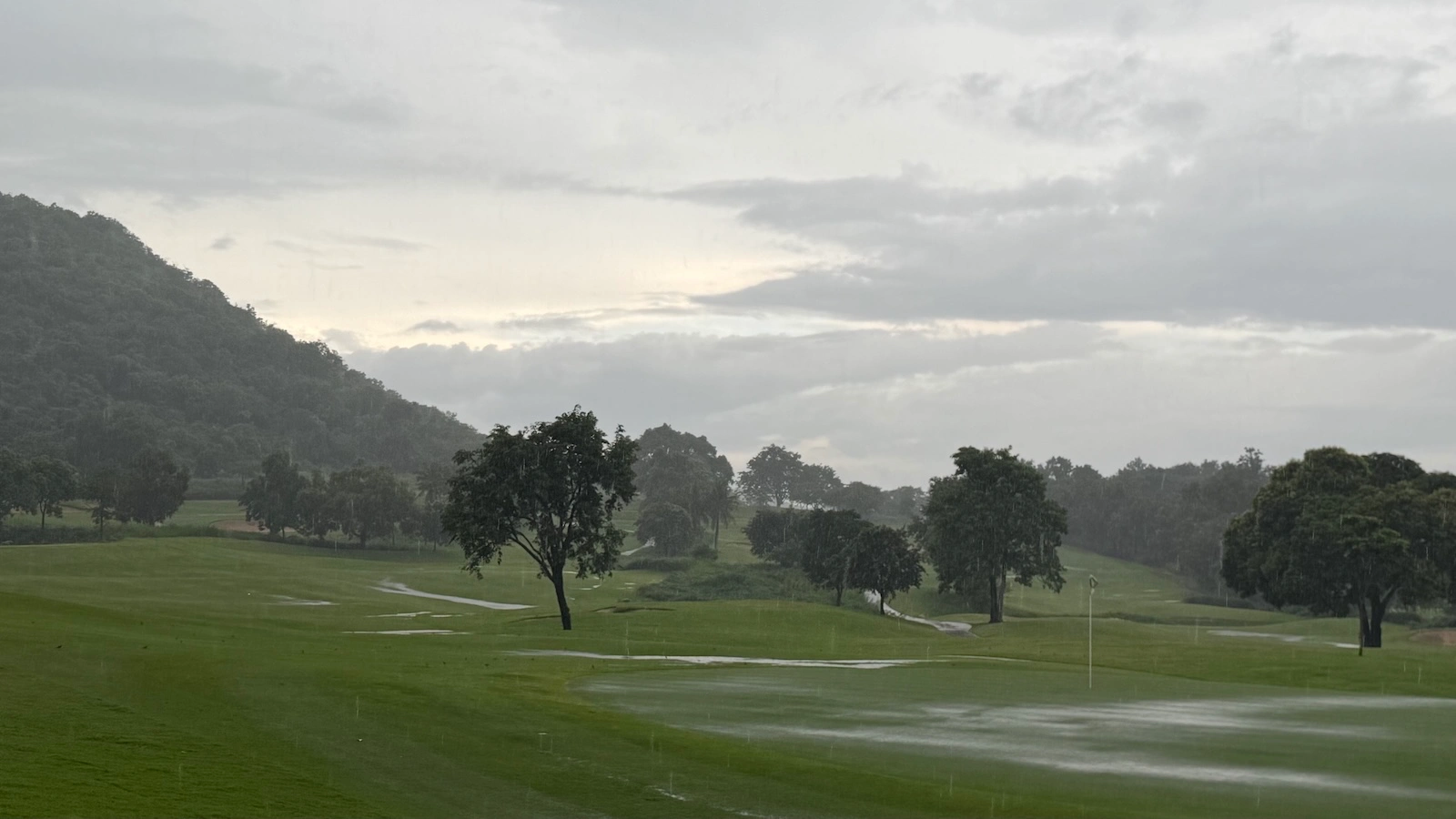
In Part 1 of this series, I discussed how the wet season tends to expose weaknesses that have already developed within the golf course. Disease is a good example. Rootzone performance, soil moisture, air movement, sunlight, traffic and the general health of the plant all influence how severely turf responds when environmental conditions become more favourable for disease.
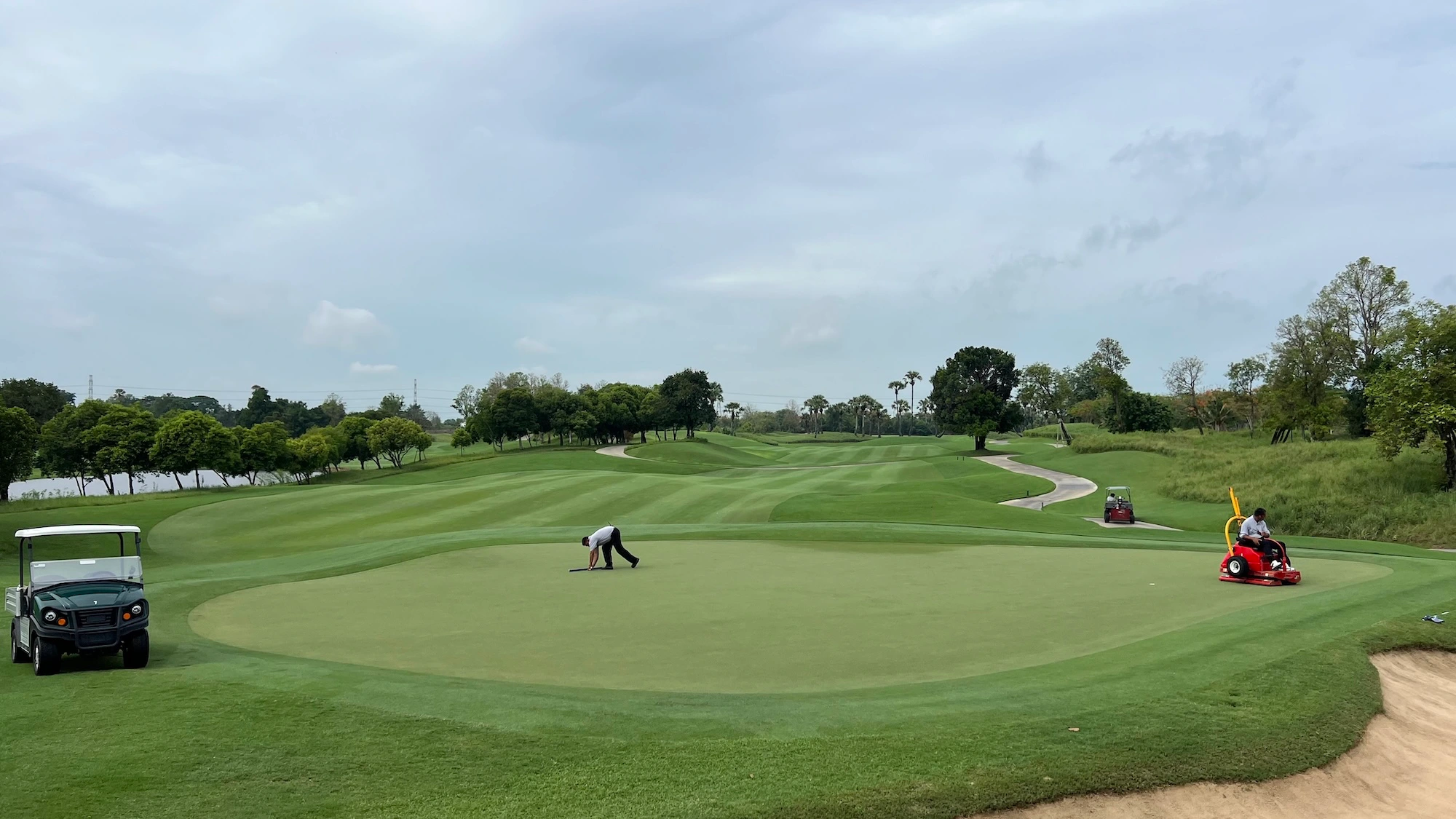
This is particularly relevant on golf courses in tropical Asia, where conditions can vary considerably from one green to another. A putting surface exposed to good sunlight and regular air movement can behave very differently from another green surrounded by vegetation or built into an area where there is very little natural airflow. Both may receive the same rainfall, maintenance programme and fungicide applications, but they are not growing in the same environment.
Disease Pressure Is Not Uniform Across the Golf Course
Bermudagrass (Couchgrass) is usually where I see the greatest deterioration during extended periods of cloudy weather. It has a relatively high light requirement, but the response to lower light is not simply slower growth. The growth habit begins to change. The plant produces more vertical growth as it reaches for available light, while lateral growth and turf density are reduced.
This becomes particularly important during the wet season. As the canopy becomes more open, the soil surface receives more light at a time when it is also remaining wet for longer, creating increasingly favourable conditions for algae to establish. Recovery from traffic, disease or other turf loss also becomes more difficult because the reduced lateral growth limits how quickly damaged areas can close. Where algae becomes established, it can further restrict that recovery.
Paspalum has different strengths and weaknesses. It performs extremely well in many tropical environments, but disease pressure can become significant once conditions favour infection. Zoysia generally has a lower light requirement than Bermudagrass and can tolerate some low-light situations better, although cultivar, maintenance intensity and the individual site still have a major influence on performance.
The practical implication is that weather data alone does not tell us which green is most likely to fail. Two greens located only a few hundred metres apart may have completely different periods of leaf wetness, soil moisture, sunlight and air movement. Those differences become much more important during the wet season because the plant has less opportunity to recover between periods of stress.
This is why regular observation remains so important. A superintendent who understands which greens remain wet longest after rainfall, where air movement is weakest and where traffic or shade consistently limits recovery is already in a much better position to anticipate disease pressure before turf loss becomes severe.
Know What You Are Managing: Pythium, Take-All Root Rot and Waitea
One of the easiest mistakes to make during a period of high disease pressure is to see declining turf and immediately change the spray programme. Sometimes that is exactly what needs to happen, but the decision becomes much more reliable when we have a reasonable understanding of what is causing the decline.
Several diseases that affect warm-season turf can look quite similar once the plant has begun to lose density. Root diseases are particularly difficult because much of the damage can occur below the surface before obvious symptoms appear above it. By the time a green becomes chlorotic or begins losing turf, the root system may already have been affected for some time.
Across warm-season turf in tropical Asia, the main wet-season concerns typically include Pythium, Take-All Root Rot and Rhizoctonia/Waitea diseases, with other pathogens sometimes becoming more important where turf is already under stress.
Laboratory diagnosis can be valuable in these situations, particularly when a problem is recurring or does not respond as expected. Visual symptoms are useful, but they do not always provide enough information to identify a pathogen with confidence. For more difficult cases, we regularly send samples to the UF/IFAS Plant Diagnostic Center in Florida, which provides specialist turf disease diagnostics.
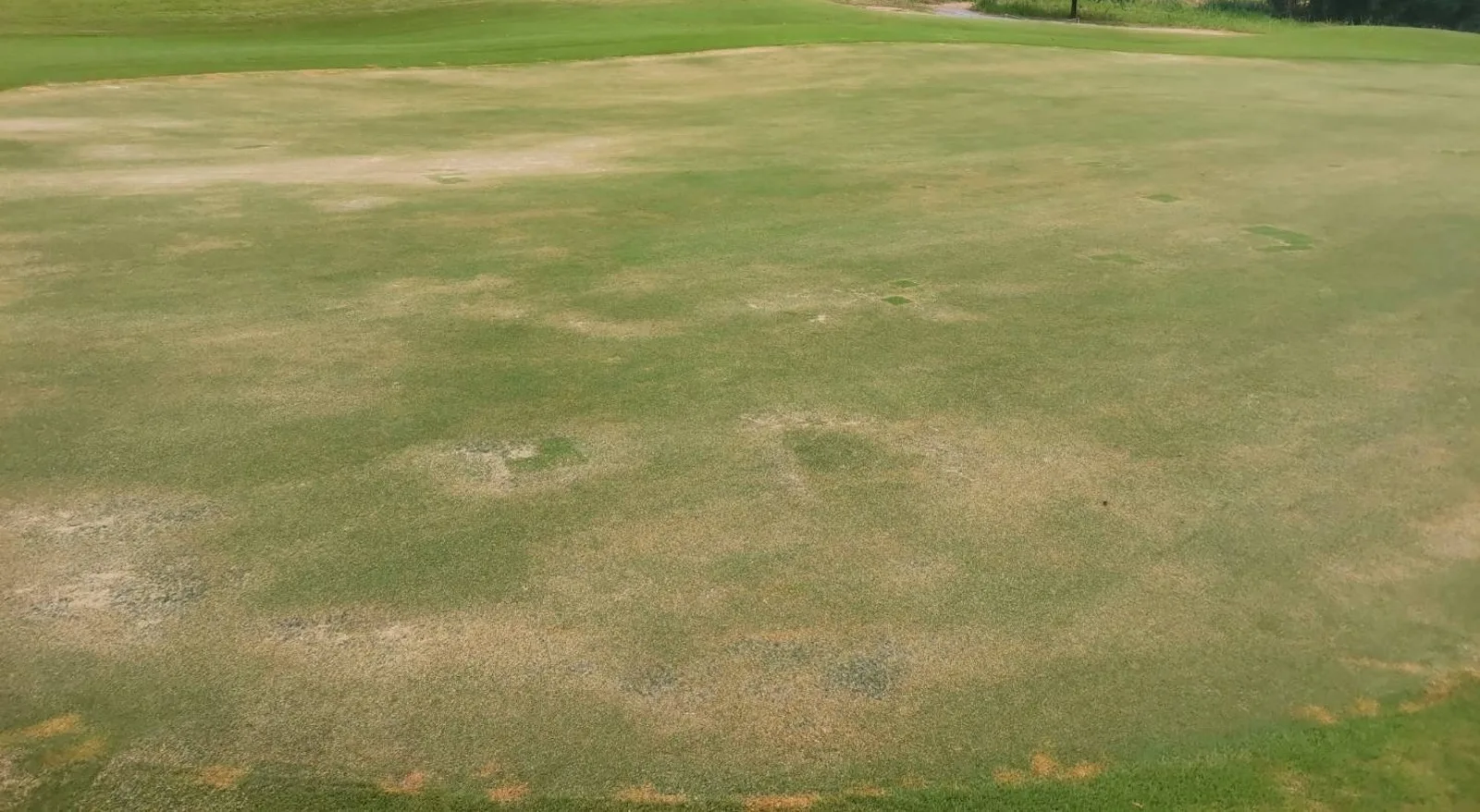
Pythium
Pythium is one of the most important disease groups during prolonged wet conditions, although it is useful to distinguish between Pythium blight and Pythium root rot because the two behave quite differently. Pythium organisms are oomycetes rather than true fungi. That distinction matters because chemistry that provides good control of many fungal diseases may provide little useful activity against Pythium.
Pythium Blight is primarily a foliar problem and can develop rapidly once conditions become favourable. Extended leaf wetness, high humidity and repeated periods of rain or cloudy weather all increase the risk. Infected turf may become greasy or matted, mycelium can be visible under humid conditions, and disease can move rapidly along drainage patterns or through mechanical activity when wet turf is mown or worked.
Pythium Root Rot is different. Infection develops within the root system and is strongly associated with extended free water and saturated rootzones. The above-ground symptoms may remain relatively subtle while conditions stay wet, then become much more severe when brighter or warmer weather returns and the damaged root system can no longer meet the plant's demand for water. This is one reason a green can appear to survive a prolonged wet period reasonably well and then deteriorate shortly afterwards.
The distinction between foliar and root infection can still influence application technique, but it is not as simple as saying that foliar diseases need leaf coverage while root diseases always require the product to be washed into the rootzone. Some fungicides need to be moved into the soil to reach a root-zone target, while systemic products may be applied to the foliage and move within the plant. Application technique therefore needs to match the disease, the active ingredient and the label directions. Selecting the correct chemistry is important, but so is understanding how that chemistry needs to be applied to reach the intended target.
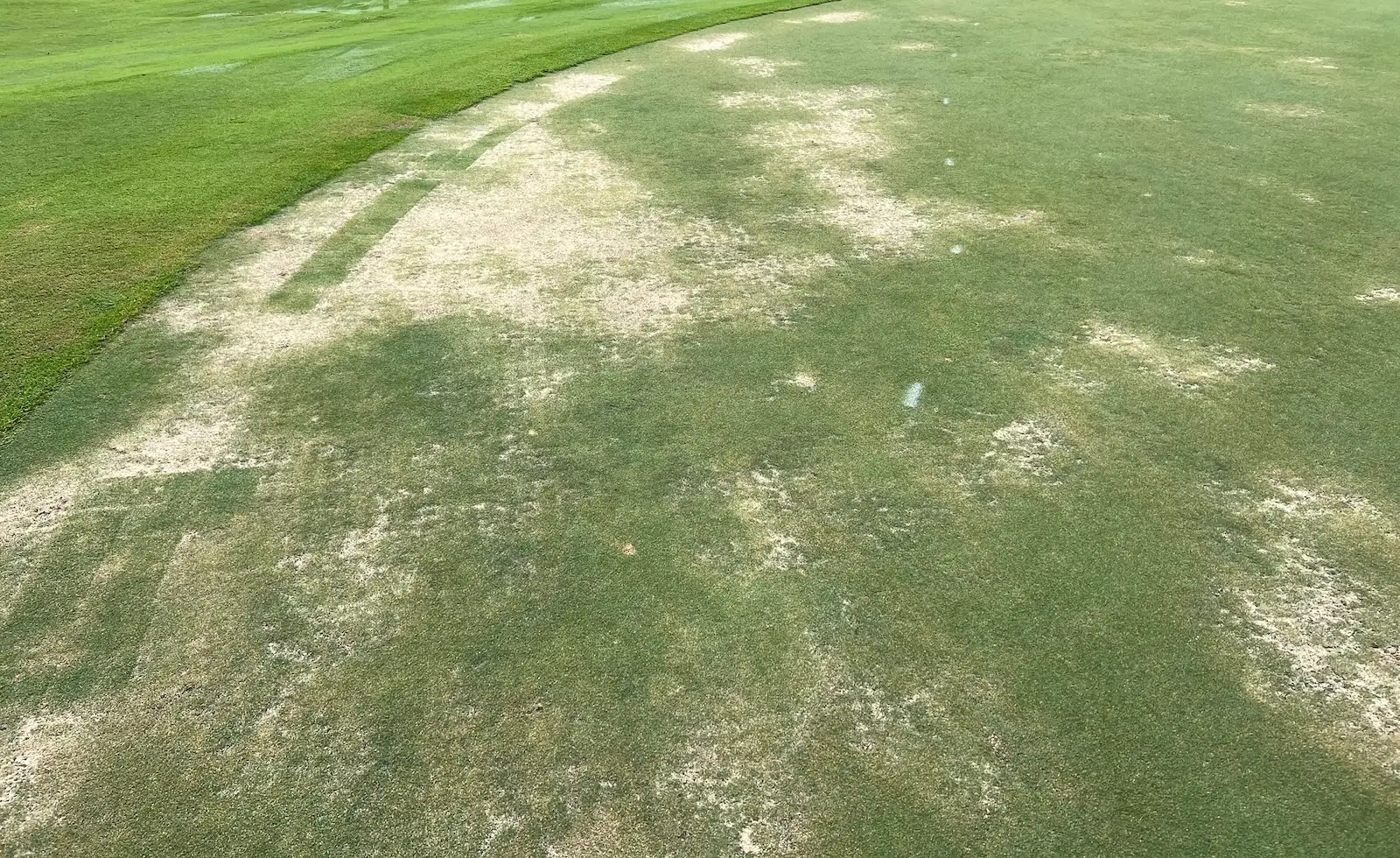
Take-All Root Rot
Take-All Root Rot (TARR), often referred to historically as Bermudagrass or Couchgrass Decline, presents a similar problem because infection occurs below the surface before the full extent of the damage becomes obvious. The disease was traditionally associated mainly with Gaeumannomyces graminis, although more recent work has shown that several related organisms can be involved in the disease complex rather than a single pathogen acting alone. For day-to-day turf management, the more important consideration is what is happening to the root system and how well the plant is able to tolerate and recover from infection.
Once roots become severely damaged, fungicides cannot repair them. Preventative applications therefore become important before significant infection develops, while recovery depends heavily on providing conditions that allow the plant to rebuild a functioning root system.
Cultural management should form part of both prevention and recovery. Slightly raising mowing height and reducing unnecessary mowing can help reduce pressure on the plant, particularly where root function has already been compromised. This becomes even more important during prolonged periods of low light, when bermudagrass produces more vertical growth at the expense of lateral growth and turf density. With less lateral growth available to close damaged areas, recovery from TARR damage can take considerably longer.
There has been increasing interest in using soil temperature to help time preventative TARR applications. Research shows that the pathogens respond to temperature and that application timing can influence suppression, but I would be cautious about reducing this to a single soil-temperature threshold, particularly in tropical Asia. Laboratory growth optima and field application timing are not the same thing, and the available evidence does not support using one temperature range as a reliable predictor of disease incidence.
This becomes particularly relevant in the tropics, where soil temperatures may remain within or close to ranges favourable for pathogen activity for much of the year. Temperature can still be useful information, but I would consider it alongside rainfall, rootzone moisture, light conditions, rooting, turf health and the disease history of the individual green rather than using it as a standalone trigger.
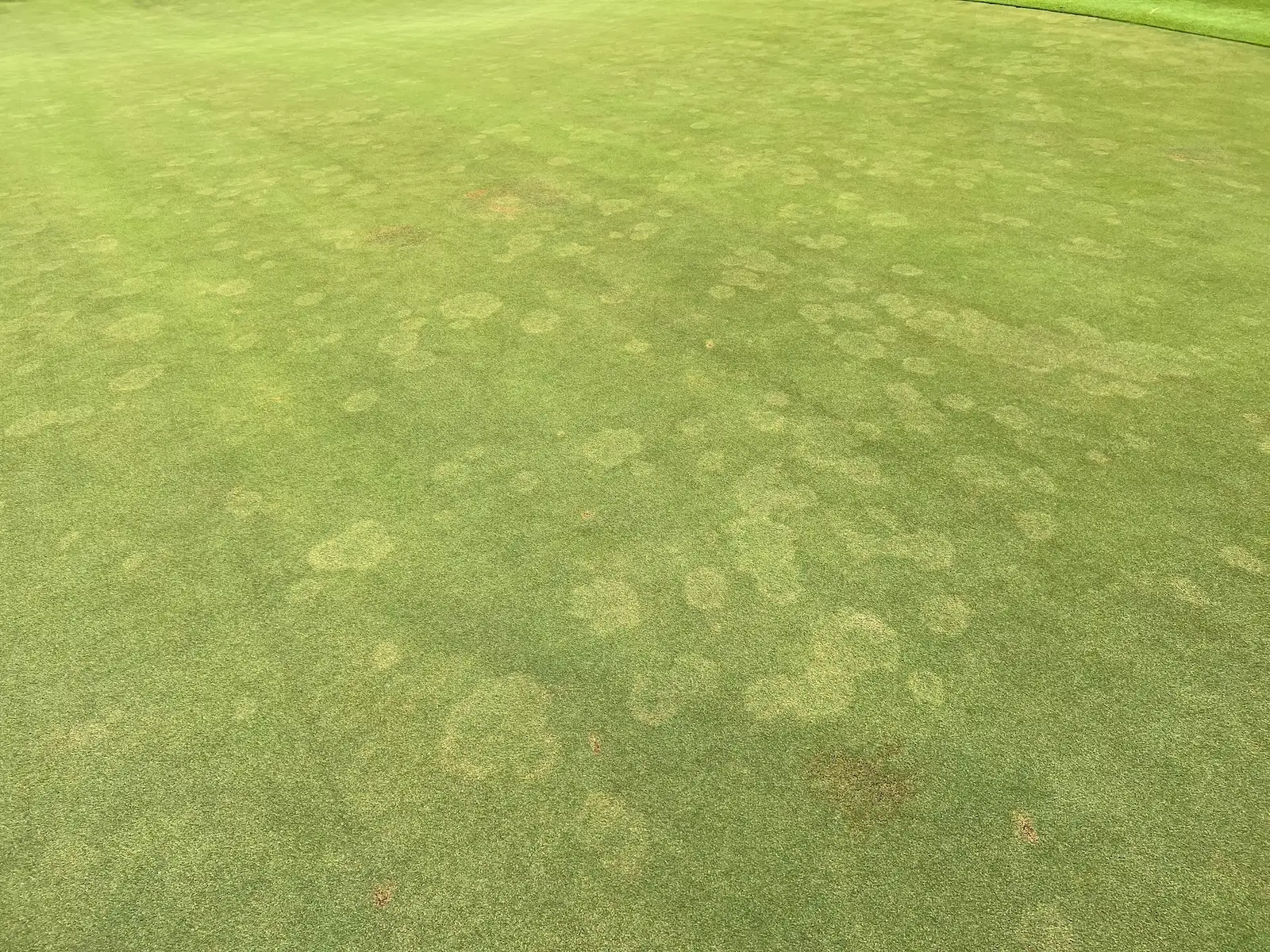
Rhizoctonia and Waitea Diseases
Rhizoctonia and Waitea diseases are another area where diagnosis can become confusing, particularly when terminology developed in temperate climates is applied to warm-season turf. Mini Ring is one of the more relevant examples on Bermudagrass. It is associated with Waitea zeae and tends to become active during warm conditions with extended leaf wetness and high humidity. Preventative control is generally more reliable than trying to recover turf after symptoms become established.
Paspalum can also suffer patch-type diseases associated with Rhizoctonia and Waitea organisms, but I would be careful about automatically calling these Brown Patch or Large Patch without confirmation. Even the available research uses the terminology inconsistently. Large Patch is generally associated with cooler conditions than we experience through much of the tropical wet season, while other Rhizoctonia and Waitea organisms can remain active under warmer conditions.
If the symptoms are not distinctive, I would avoid putting a specific disease name on the problem based on appearance alone. Several pathogens can produce very similar symptoms, particularly once turf has begun to thin or decline. In those situations, sending a representative sample to a diagnostic laboratory is usually the better option because it gives the superintendent a much stronger basis for deciding whether the existing programme needs to change.
Building Your Fungicide Programme Around Actual Risk
A preventative fungicide programme is much easier to manage when it is planned before the wet season begins. I normally start with the diseases that have caused the greatest problems at that particular golf course, particularly where the number of effective products is limited or the label restricts how often they can be used.
Take-All Root Rot is a good example in Thailand. The number of products available for TARR is relatively limited, and several of the options we use are restricted to only a small number of applications each year. That makes it difficult to manage TARR effectively if those applications are used without considering when the greatest risk is likely to occur. I therefore tend to build the TARR programme first, placing the available preventative applications where I believe they will provide the greatest value based on previous disease history and expected environmental conditions.
Once that framework is in place, I look at the next major disease risk. In many cases this is Pythium. We generally have more chemistry available for Pythium, so the programme can be built around the TARR applications that are already scheduled. Where an application provides useful activity against both diseases, that is taken into account. The remaining Pythium gaps can then be filled with appropriate chemistry while rotating FRAC groups between applications.
After the major root and crown disease risks have been covered, I look at where additional protection is required for foliar diseases. Some of the applications already included in the programme will provide broader disease coverage, while other periods may require a separate preventative application. By building the programme in this order, each application has a purpose and we avoid adding products simply because there happens to be an empty week in the calendar.
The programme is still adjusted as the season develops. Previous infection history, weather forecasts, the condition of the turf and the number of consecutive low-light days all influence how aggressively I want to protect the greens. Field observation is equally important. If disease activity is continuing after an application, that tells us something very different from a green where the disease has stopped progressing and the turf is beginning to recover.
This does not necessarily mean every green receives exactly the same treatment. If disease activity is confined to a small number of greens and the remaining surfaces are healthy, with better environmental conditions and no visible disease activity, I will often treat the affected greens separately rather than automatically applying the same additional treatment across the entire golf course.
FRAC rotation is planned at the same time. Changing commercial products does not necessarily mean the chemistry has changed, so I track the active ingredient, FRAC group, target disease and application date throughout the season. This makes it much easier to see where the programme may be becoming too dependent on one mode of action and, just as importantly, whether a product is approaching its maximum permitted number of applications.
Application technique also needs to suit the chemistry being used. Different fungicides behave differently once applied, so label directions on water volume, irrigation, drying time and placement are important. Product selection and application method should therefore be considered together, particularly when the target is below the surface.
There is no fungicide programme that should simply be copied from one golf course to another. Disease history, grass species, climate, available chemistry, product registrations and label restrictions all influence how the programme is built. The objective is to develop the preventative framework in advance, then adjust it as conditions change rather than trying to rebuild the programme every time disease appears.
How Rain and Conditions Affect Fungicide Residual
Application interval is another area where wet-season programmes can become too rigid. A label may provide a range of intervals, but that does not mean the upper end of the range represents a guaranteed period of protection under every set of conditions. Biological residual is influenced by the disease being targeted, disease pressure, chemistry, turf growth, mowing, rainfall and irrigation after application. Research on creeping bentgrass has shown that rainfall soon after application can significantly reduce fungicide performance, although the effect varies with the chemistry being used. This is one reason I would not treat a 14- or 21-day application interval as a guaranteed period of protection under every set of conditions.
During very high disease pressure, I tend to pay much closer attention to the shorter end of the permitted interval, particularly where the weather remains favourable for infection. That is different from spraying more frequently simply because the wet season has arrived. The interval should respond to conditions, just as irrigation, mowing and other maintenance decisions do.
Heavy rainfall after an application also needs to be considered in context. Some fungicides will retain good activity, while other applications may be compromised depending on the target, mobility of the active ingredient, the time between spraying and rainfall, and whether the treatment needed to remain on the leaf or move into the rootzone.
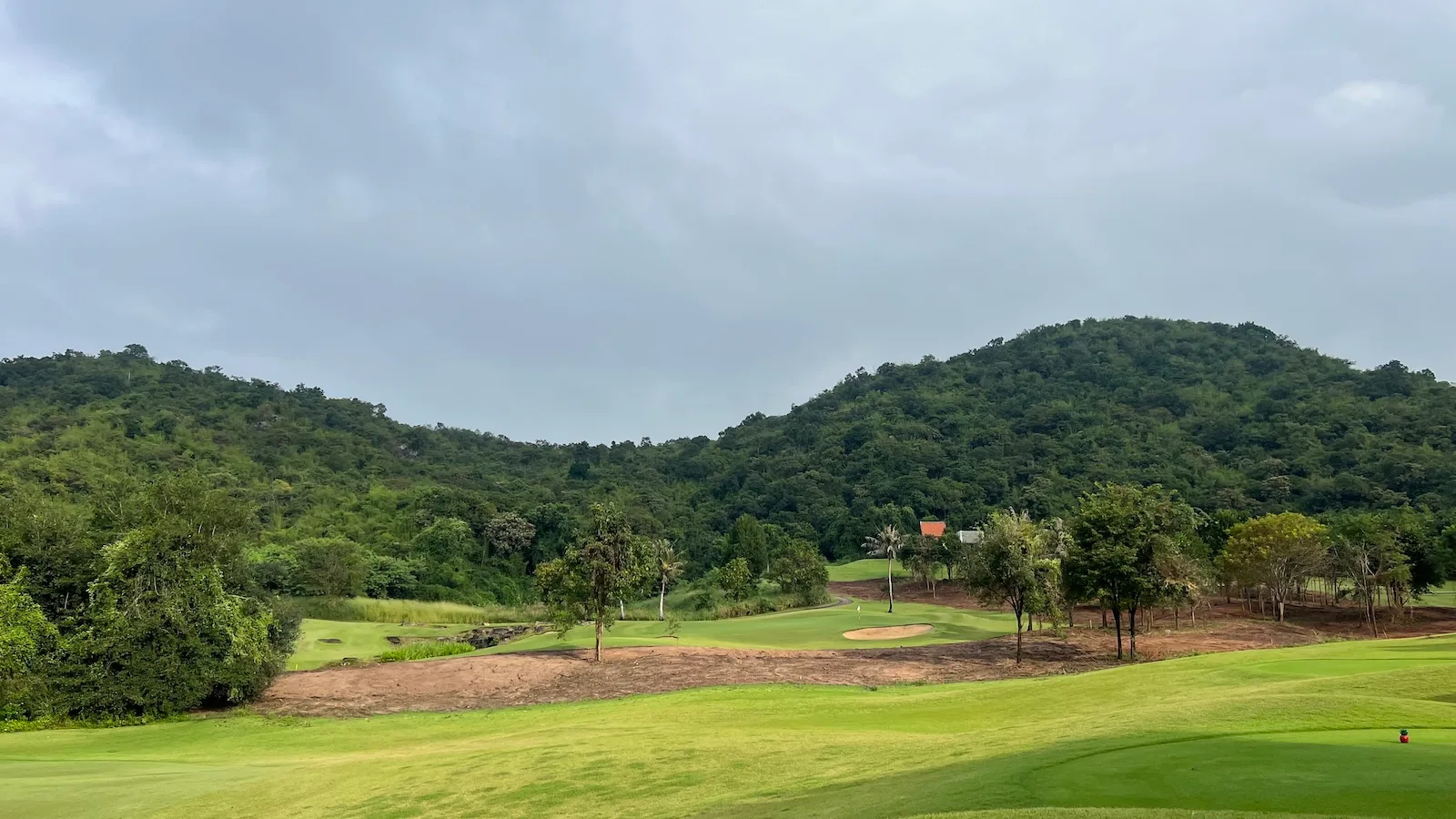
Why the Same Programme Performs Differently Across the Course
Some of the most severe wet-season disease problems I have seen have occurred on greens where the preventative fungicide programme was already quite strong. At one golf course in tropical Southeast Asia, three greens repeatedly suffered considerably more turf loss than the rest of the course. Organic matter was higher than desired and clearly needed to be addressed, but the other greens had broadly similar rootzone characteristics without experiencing anything close to the same level of damage.
The affected greens were different in another way. Dense vegetation and undergrowth severely restricted air movement, and moisture management was not tight enough for those conditions. Following rainfall, the surfaces stayed wet and humid considerably longer than greens located in more open parts of the property.
The management response therefore involved more than changing chemistry. Organic matter reduction was increased, airflow improved through clearing and selective vegetation management, and moisture control became much more precise. Once those factors were addressed together, the severe recurring losses were not seen at the same level again.
I would not use that example to claim that one particular change solved the disease problem because there was no single cause. Organic matter, moisture, airflow and plant health were interacting with each other, and the fungicide programme had to operate within the environment we were giving it.
I see a similar challenge on greens where the surrounding design produces very little natural air movement or concentrates golfer traffic through relatively small areas. Those surfaces simply have less margin for error during prolonged cloudy weather. Recovery slows while traffic continues, the surface remains wet longer, and disease pressure increases at the same time.
The superintendent needs to recognise those differences early enough to adjust maintenance before turf begins disappearing. Sometimes that means changing moisture management or mowing practices. In other situations, it may justify vegetation work, improved traffic control or even mechanical airflow where the site cannot realistically be improved in another way.
Organic Matter and Disease Pressure
Organic matter is often one of the first things blamed when a green remains wet, or disease becomes more severe. Sometimes it is an important contributor, but I do not think it is useful to draw a direct line between an organic matter percentage and disease incidence.
Accumulated organic material changes the physical behaviour of the managed rootzone. Depending on the profile, it can increase moisture retention, slow infiltration and reduce the amount of air available around the roots. Those changes can make it much more difficult to keep the surface dry and the rootzone adequately aerated during prolonged rainfall.
The research around TARR illustrates why we need to be careful with simple assumptions. A recent observational study found lower organic matter at 5–10 cm on sites where TARR was present than on sites where TARR had not been reported, which clearly does not support the idea that more organic matter automatically means more TARR.
The more useful questions are how long the surface remains wet after rainfall, whether water is infiltrating as expected, how much air remains in the profile, what the active rooting depth is and whether moisture can be managed without keeping the upper rootzone continuously saturated. That is where organic matter management becomes relevant to disease management.
Airflow, Surface Drying and Algae on Greens
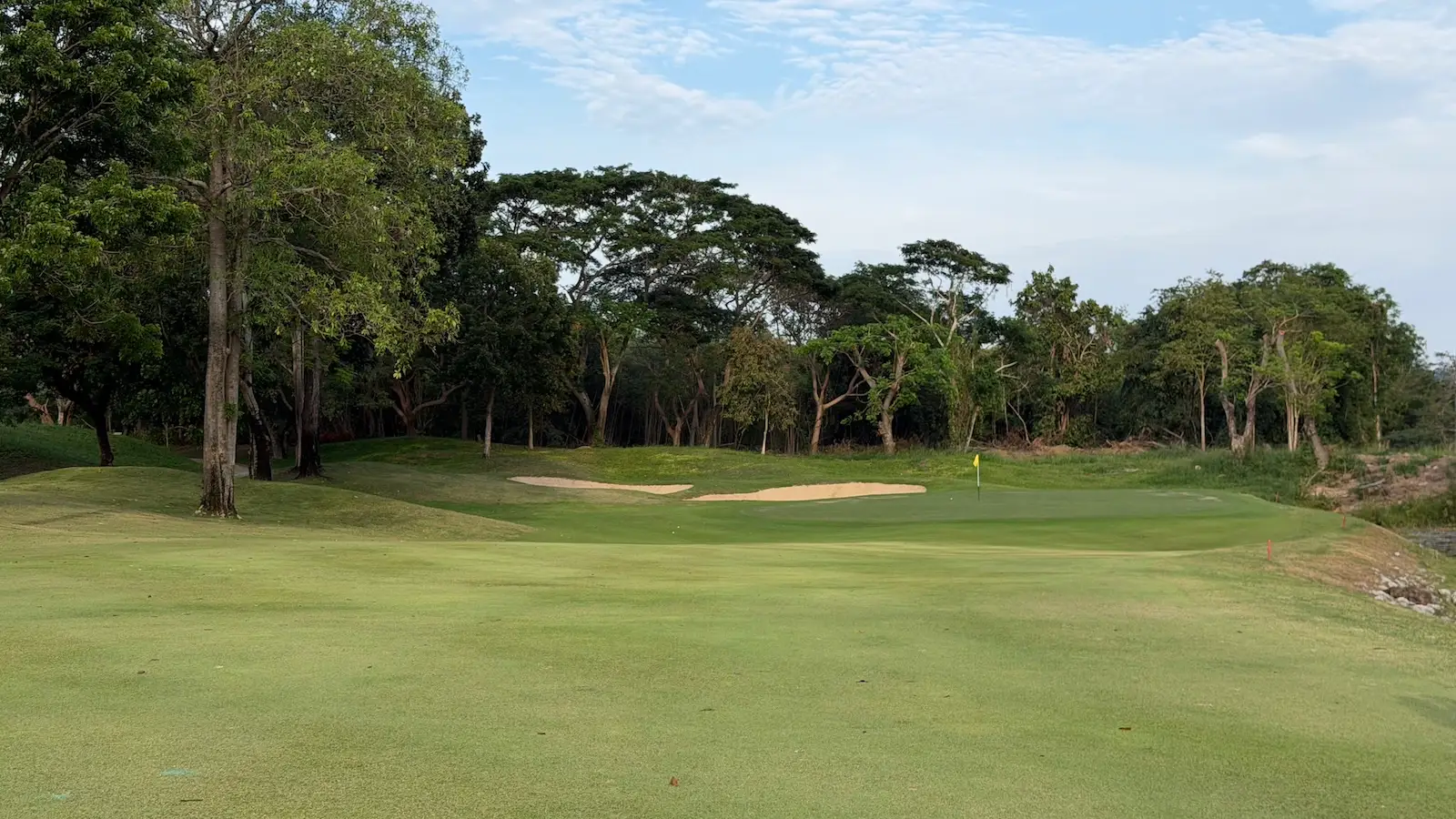
Air movement is one of the first things I look at when only a small number of greens repeatedly perform worse than the rest of the golf course. Poor airflow changes how long dew, irrigation and rainfall remain on the leaf. It also creates a different microclimate immediately around the turf canopy. A green enclosed by mature trees or dense vegetation can remain humid long after a nearby green has dried.
Vegetation management can therefore become part of disease management. That does not mean clearing every tree around a putting green. It means recognising when vegetation has developed to the point where the growing environment is being compromised, then deciding whether selective pruning, undergrowth removal or other changes can improve conditions without unnecessarily changing the character of the golf course. Where natural airflow cannot realistically be improved, fans may be justified.
Algae and cyanobacteria often develop in the same difficult environments. They are not turfgrass diseases, but their presence can tell us a great deal about what is happening at the surface. Persistent moisture, poor drainage, shade, low turf density, organic matter and limited air movement can all contribute to their development.
Once established, algae can make the problem worse by affecting infiltration and gas exchange at the surface. Chemical control may therefore form part of the programme, but killing the algae without changing the conditions that allowed it to develop usually provides only a temporary improvement.
When algae becomes persistent, I want to understand why the surface is staying wet, why turf density has declined and whether the rootzone is moving water effectively. Light sand topdressing, small-diameter cultivation, better airflow and more precise moisture management may all form part of the solution depending on the site.
Managing Disease Means Managing the Growing Environment
The wet season will always increase disease pressure. We cannot control how much rain falls, how long cloud cover persists or how humid the air becomes. We can, however, influence many of the conditions that determine how well the turf survives those periods.
That means understanding which greens remain wet longest, where airflow is restricted, where traffic is concentrated and whether the rootzone is functioning properly after heavy rainfall. It means adjusting mowing and other maintenance practices when the plant is under prolonged low-light stress, and being prepared to protect the turf before infection becomes severe rather than waiting for obvious damage.
Fungicides remain an essential part of that programme. Used preventatively, applied to the correct target and rotated sensibly, they provide protection that cultural management alone cannot provide. Their effectiveness is much greater when the rest of the growing environment is working with the programme rather than against it. For me, that is the real difference between a wet-season fungicide programme and a wet-season disease management programme.